June 13 – 19, 2022
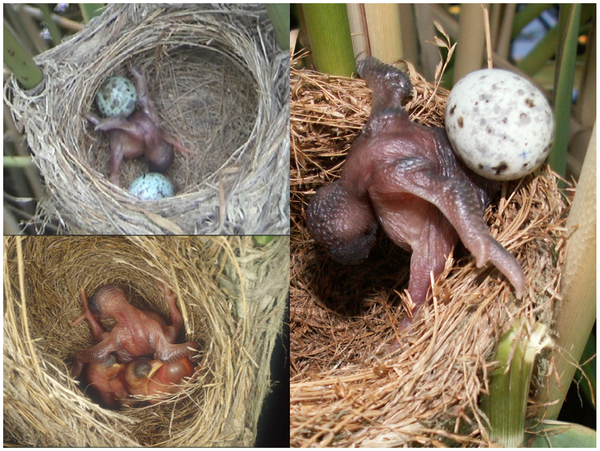
A couple months ago, our family watched a documentary about cuckoo birds. In a stroke of evolutionary outsourcing genius, a mother cuckoo sneaks an egg into another bird’s temporarily vacant nest, hiding it among the legitimate clutch, knowing the returning parent will lovingly raise whoever hatches there. A cuckoo hatchling is a grotesque glob, like a singed, melted wax gargoyle. It can’t see. It can’t hear. It can’t raise its head. All it knows and all it has is the overwhelming urge to kill. Serially. It senses other eggs in the nest and knows that their embryonic inhabitants might someday take its stuff. So with the will of Sisyphus and the compassion of Jack the Ripper, it methodically uses its back to roll each boulder up and out of the nest.
Imagine if each of two cuckoo mothers place an egg in one nest. Imagine two hatchlings trying to eliminate each other to monopolize parental resources. Well what you have in mind now . . . that’s the backseat of our car on the 3-hour drive from Austria to Schloss Eggersberg.
Putting aside 4pm (and sometimes, 3:30pm and 10pm) “sweet snack,” the next thing about which Emilie is most excited for this trip is sleeping in a real castle. Needing a convenient break between Austria and Augustusburg, we plan our castle adventure in a converted hotel in the small village of Riedelberg, well off the American tourist path. Schloss Eggersberg was built in the 16th century as a royal hunting lodge and restored as a small inn with 17 rooms, only two others of which are occupied while we are there.
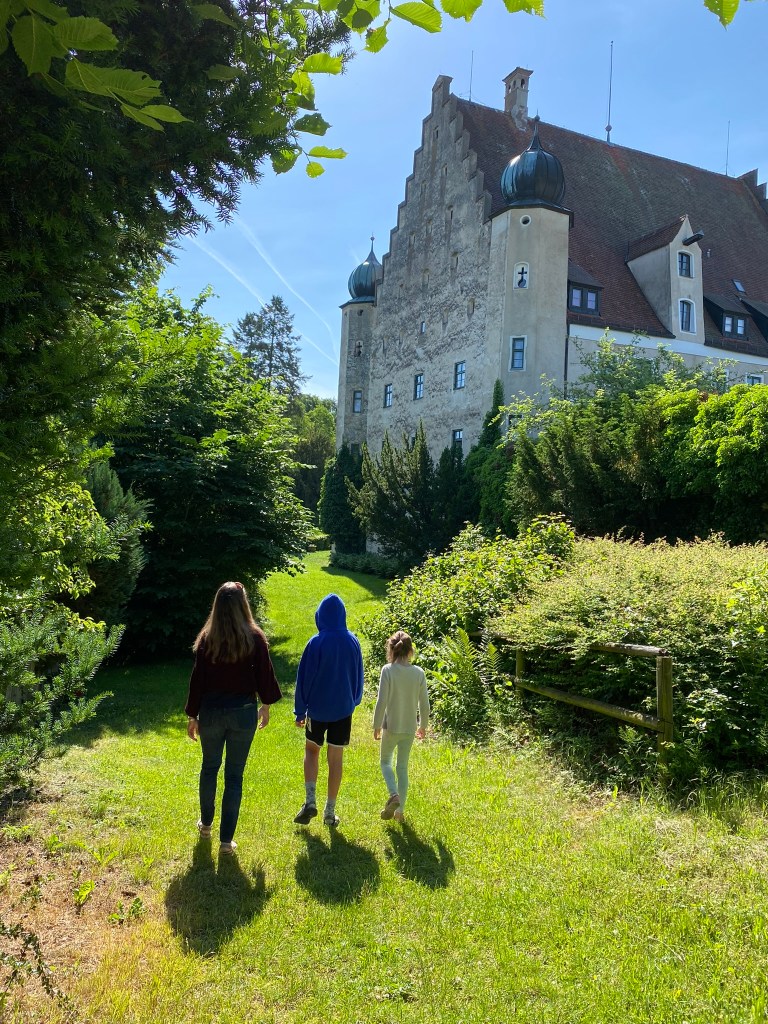
We arrive at the schloss around 2pm and opt for early tea and cake in the castle garden.
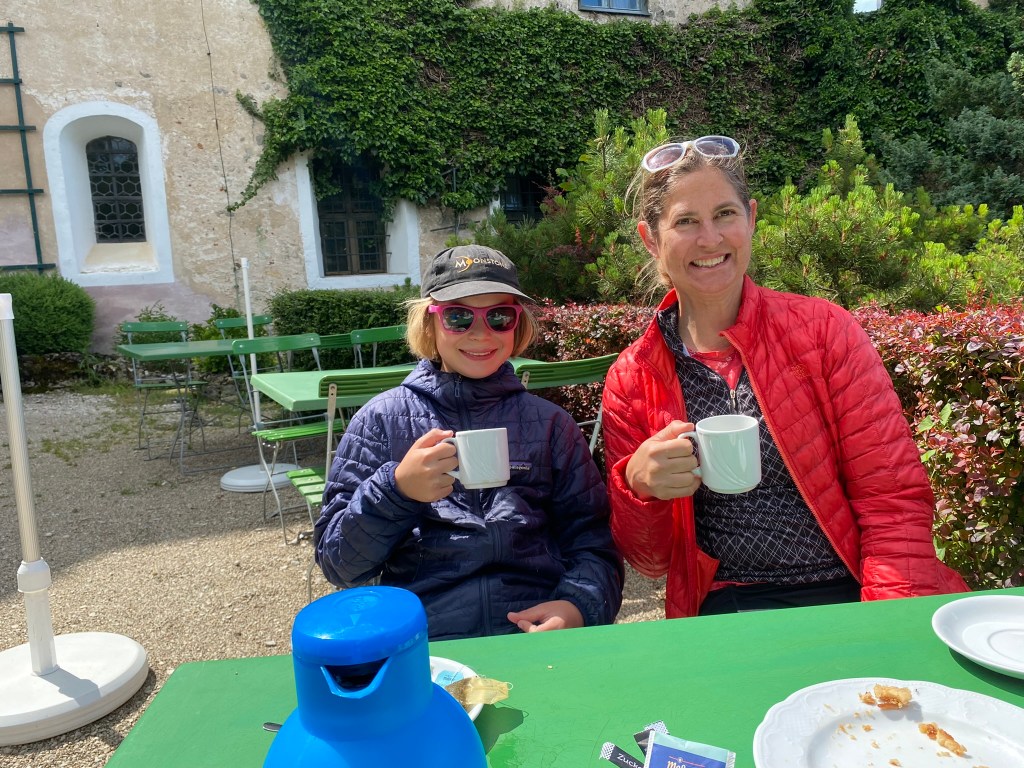
During high tea, my daughter and I unwittingly perform our own deranged rendition of the classic children’s book the Runaway Bunny (and this is verbatim):
Rabbit: “You’re going to take a bath.”
Bunny: “You make me take a bath, and I’ll claw your face off.”
Rabbit: “You claw my face off, and I’ll sell your organs on eBay.
Bunny: “You sell my organs on eBay, and I’ll haunt you as a ghost and wrap you up in a blanket and throw you in a volcano.”
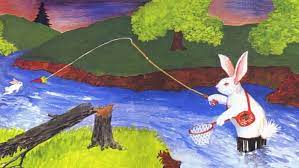
After tea, we get a private tour of the castle’s onsite museum: an odd mix of old paintings, books, agricultural tools, and medieval armor and weapons. Then it’s downtime in the room, and a bath for the bunny.
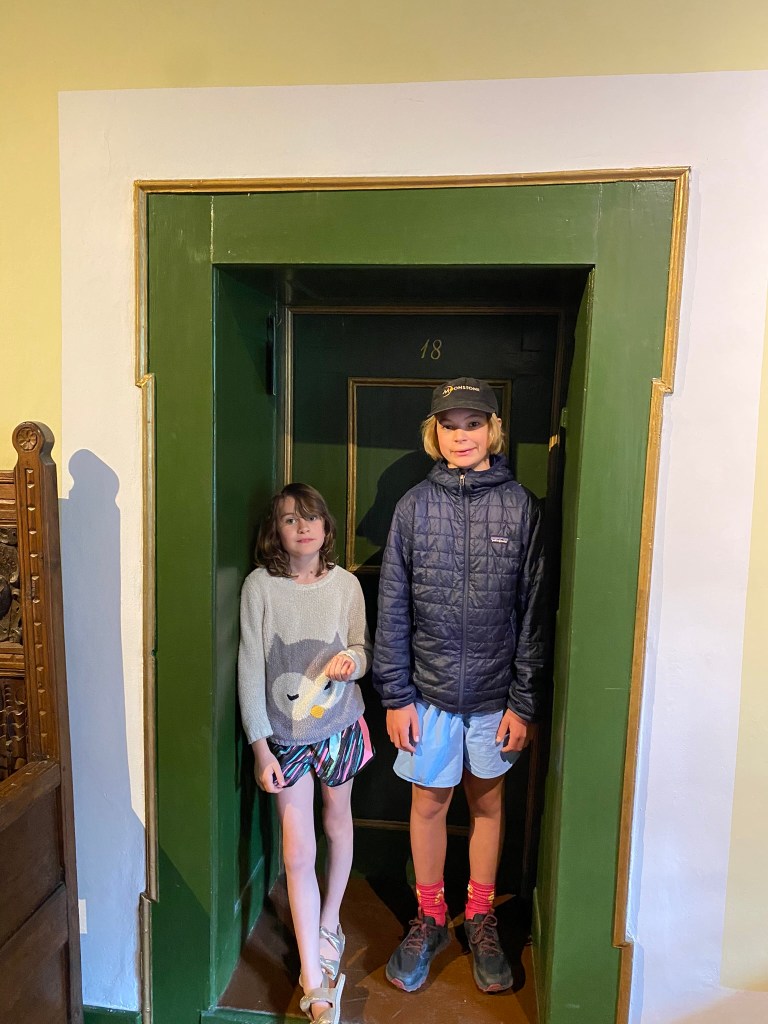
The castle makes efforts to “source locally,” including toilet paper that must come directly from a nearby lumberyard’s bark pile or the town’s steel-wool smelter.
Dinner is in a formal dark-paneled dining wing that triggers the urge to eat some leg of animal with my hands and direct the lutist to lighten the ballad. Were it not everyday behavior, the kids could blame the medieval setting for their pre-Victorian dining habits. Emilie hunches over her two-handed grip on a piece of bread, gnawing it like a bone, trying to get all the “meat” without any crust. Elliott taps out an allegro open-mouthed rhythm in 4/4 time, syncopated with a gurgling breath, in on beat 2 and out on beat 4. A kind look from my wife is a reminder to continue to lower the limbo bar of parental expectations.
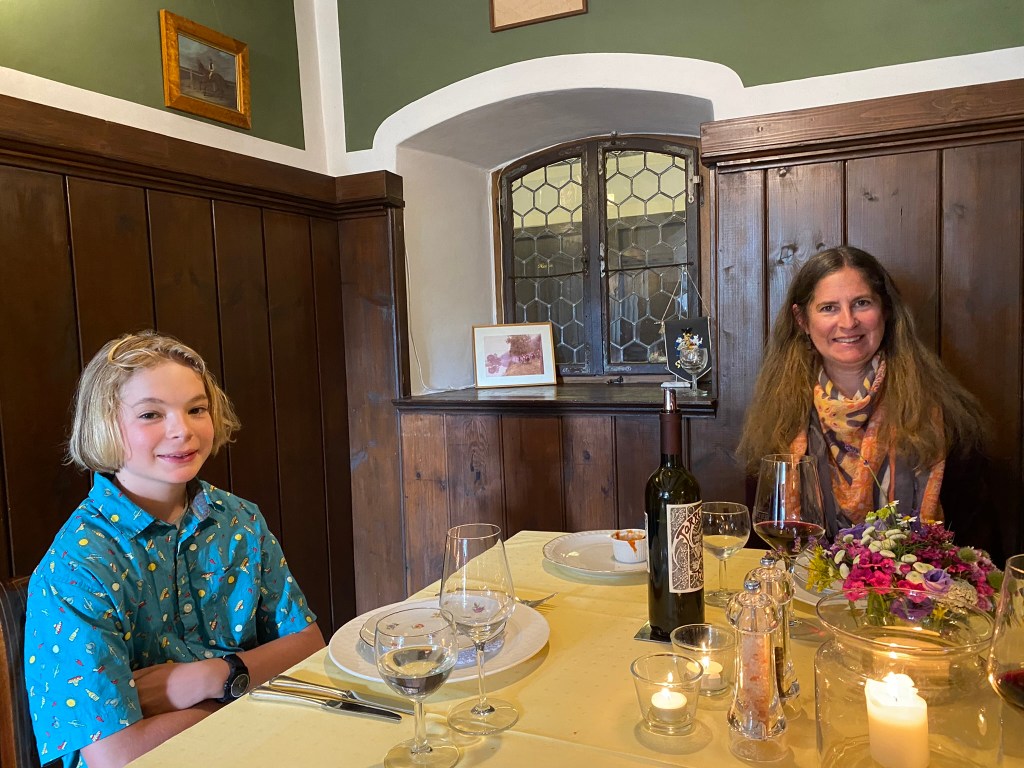
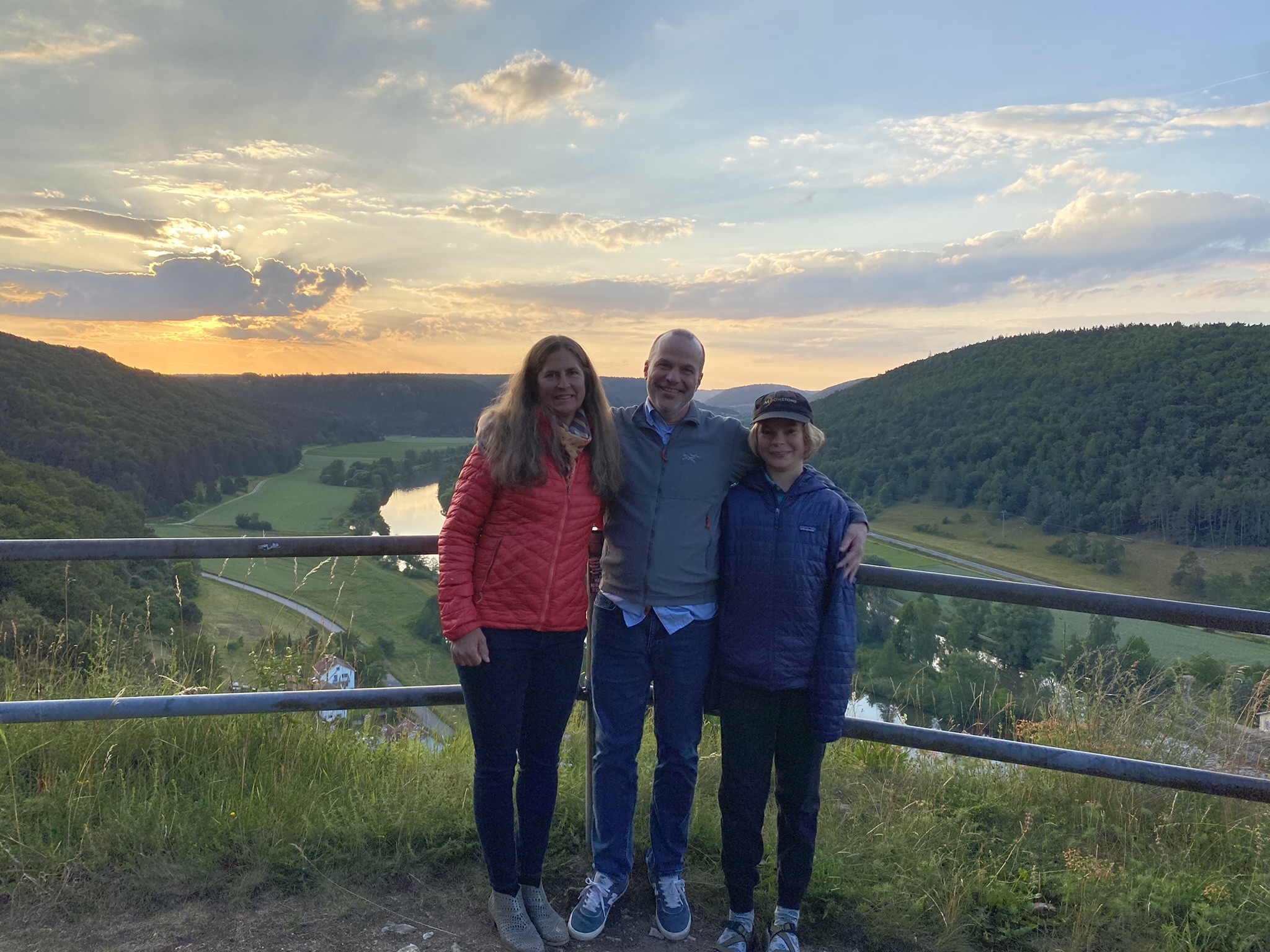
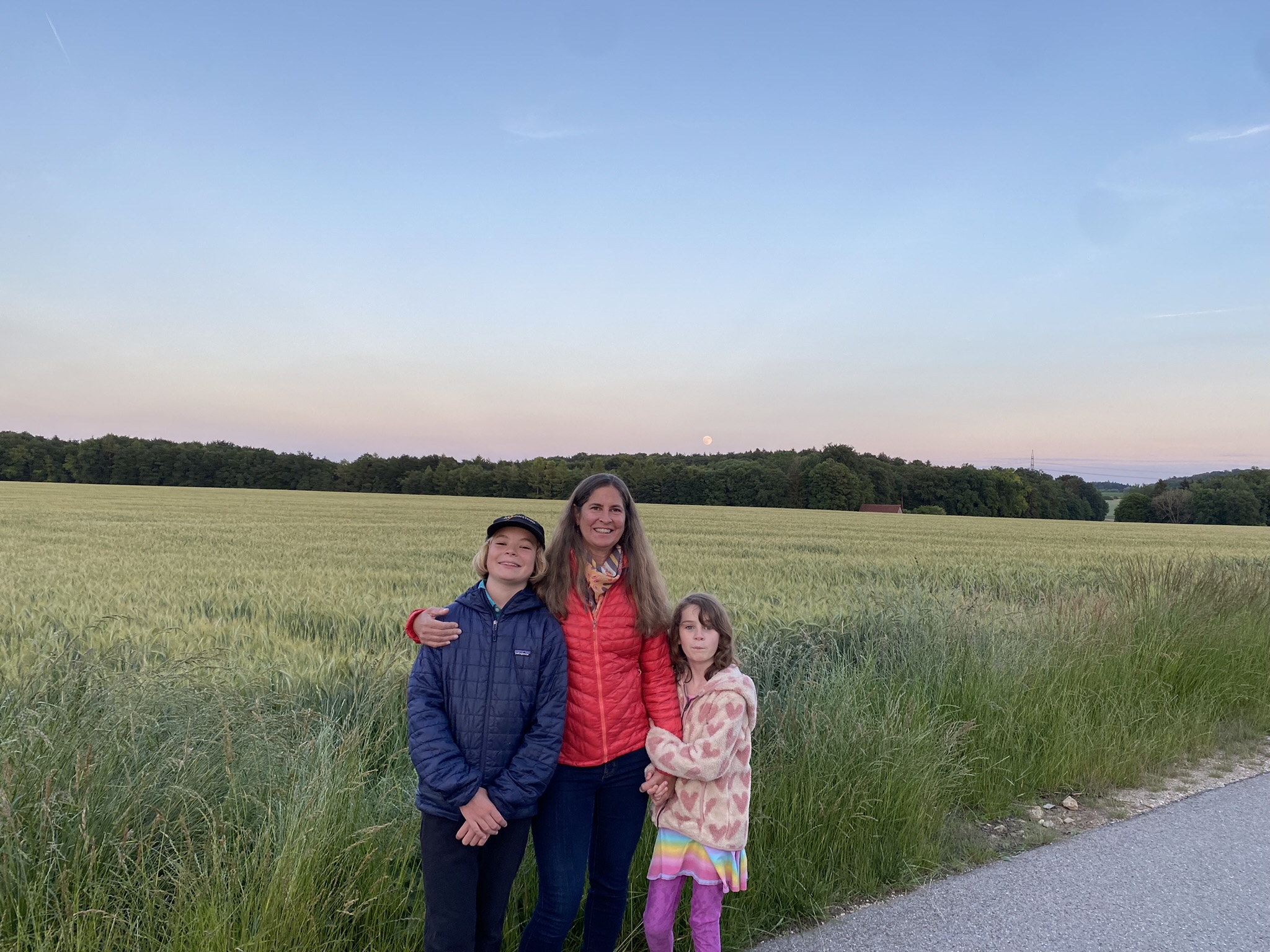
After the gourmet feast of roast pork, vegetables, and Italian wine, we stroll the village at sunset.
The next morning, we take our wolfed breakfast on a walk around the spot where the bones of an ancestor castle of Schloss Eggersberg lie. The gravity that pulls tourists to any and all signs increases with age, and I feel a pull strong enough to overpower my common sense that I cannot read the various German descriptions of the ruins. There’s no one else here, but I instinctively nod with profound understanding as I turn from one set of squiggly lines to the next.
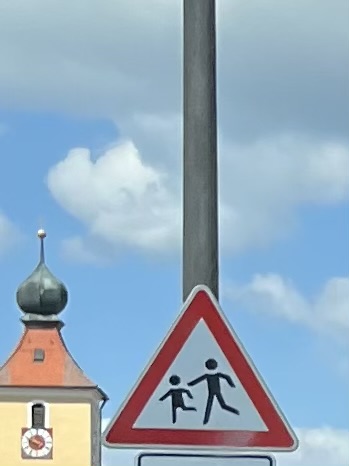
signs in smaller German villages.
It’s about a 3-hour drive to Augustusburg. The back seat’s Tourette’s can’t resist erratic squeezes of an empty plastic bottle or click-click-clicking an AirPod case. I dream of lebensraum. The kids are thrilled with a rest-stop McDonalds and “high-end” bathroom that, like elite American universities, accepts cash in exchange for admission.
Somewhere on this leg, Joanna realizes she still has the massive skeleton key to our castle room in her purse. She calls Schloss Eggersberg to confess. The friendly proprietor is unbothered and tells us to drop the key off at any hotel in Germany; there’s a rule or custom that hotels will return keys free of charge. Wow, how un-American!
Augustusburg is a bit of a homecoming for Joanna, who went to school in nearby Chemnitz some 25 years ago. It’s also where one of Joanna’s longest besties, and our family friends, have just purchased a new house — new to them, that is, and new to Augustusburg in 1572, when it was built as the laundry house to a castle sitting 100 meters up the hill.
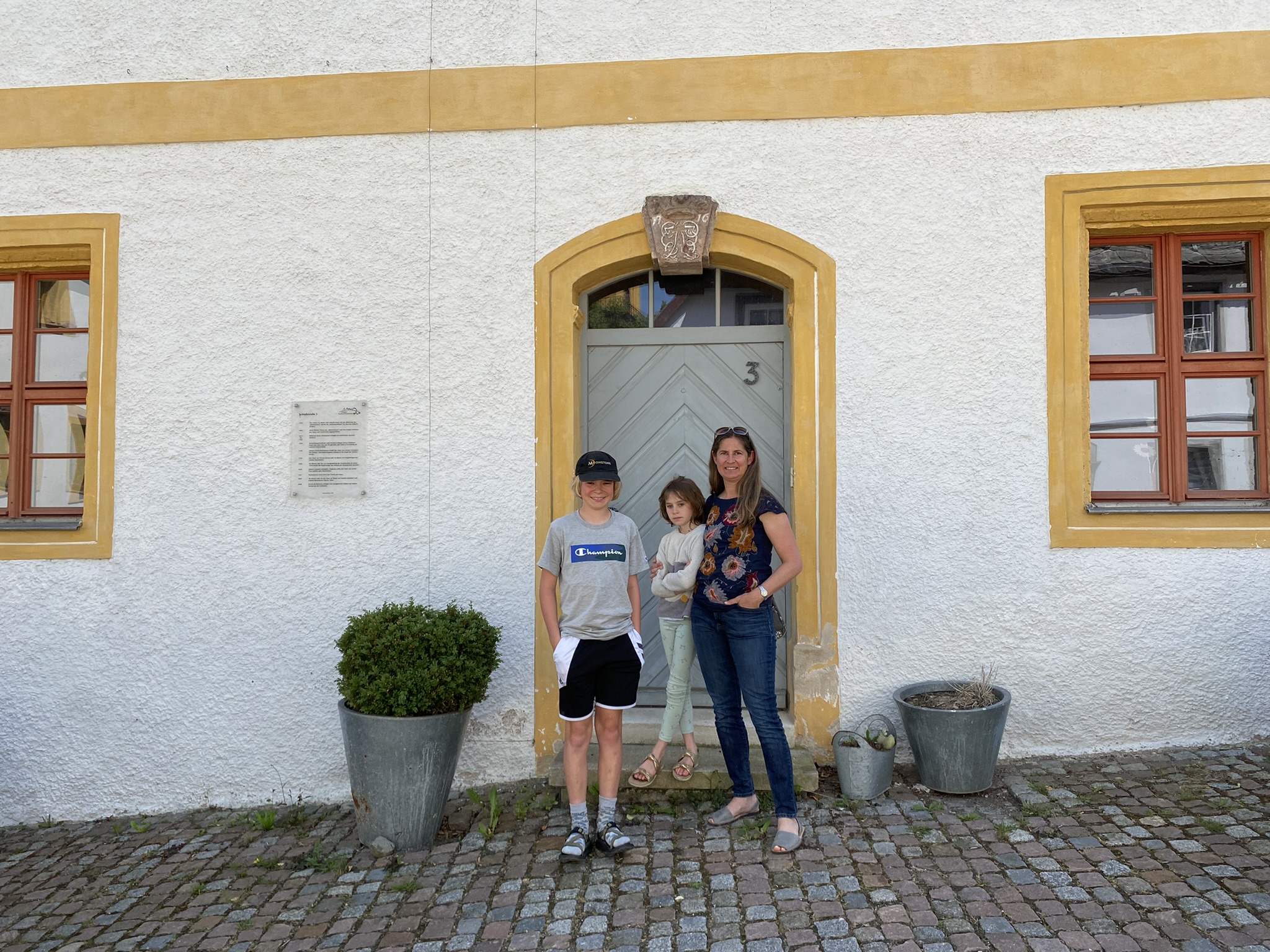
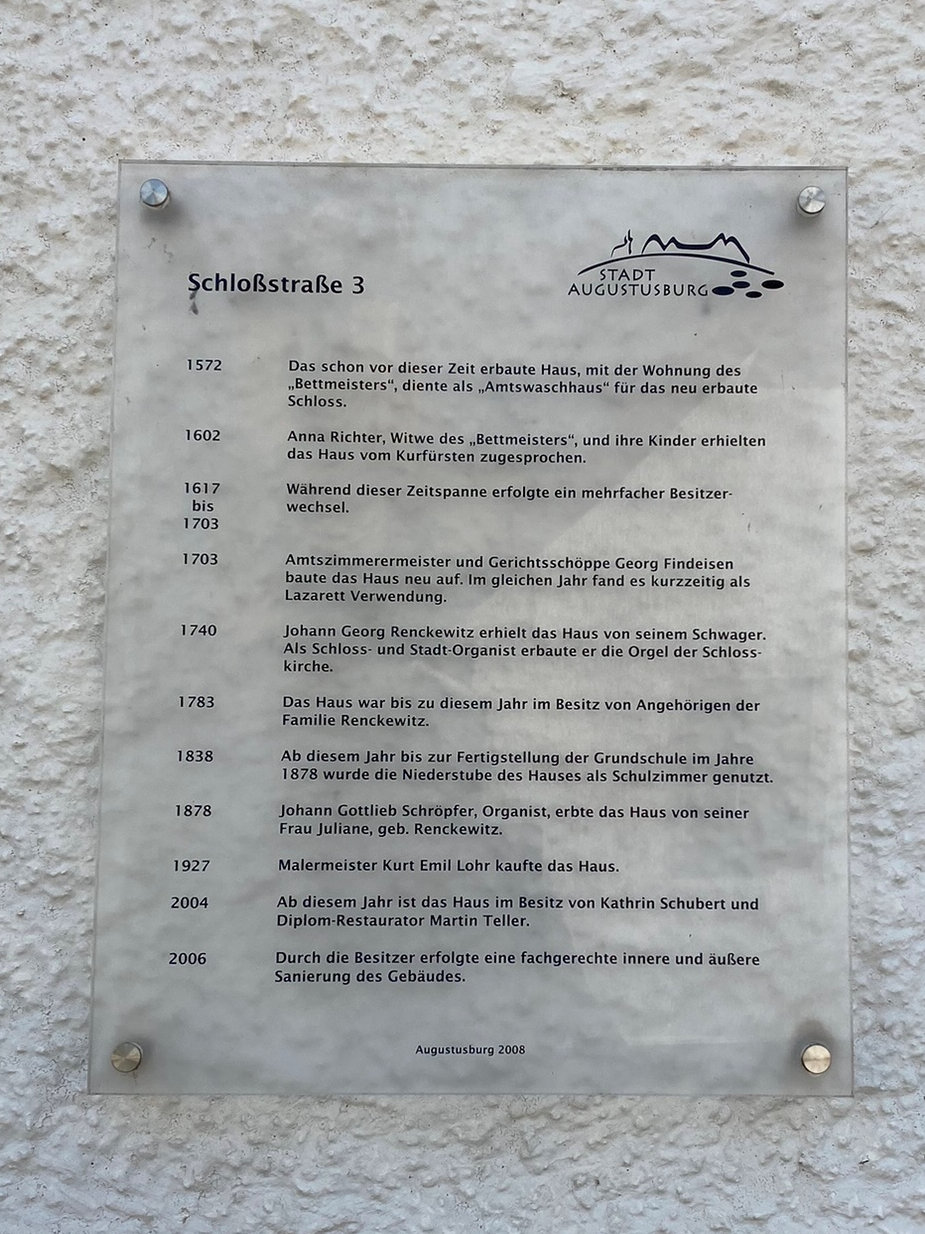
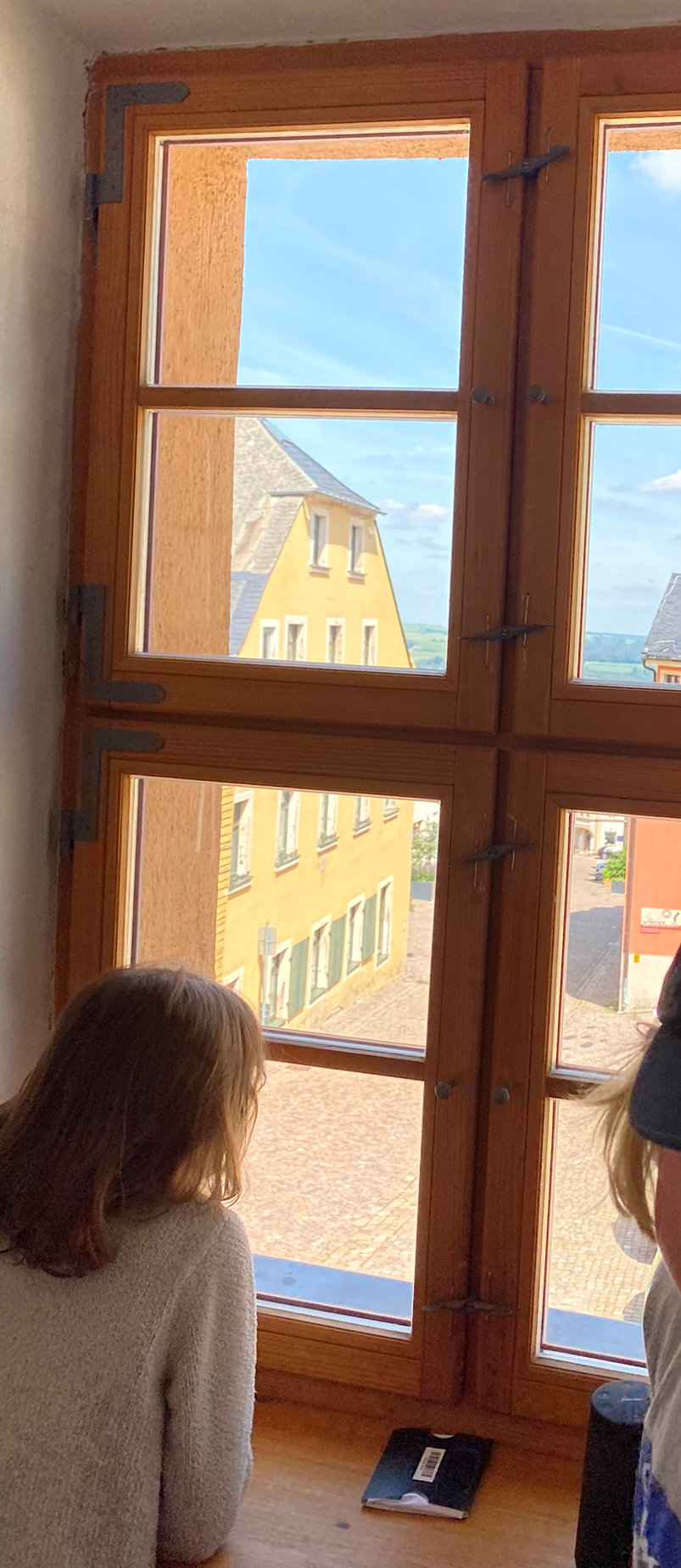
At various times since, it has served as a military hospital and school — and now home to the finest hosts in Germany and to Russell, the humping wirehaired vizsla.
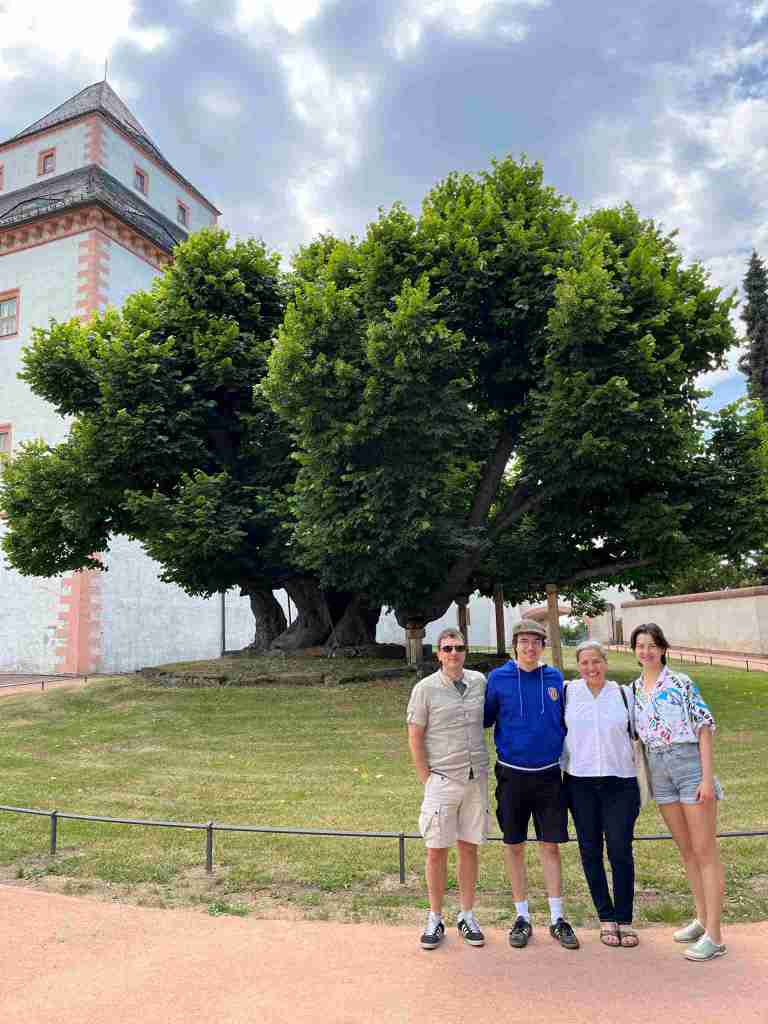
the humping wirehaired vizla, not pictured).
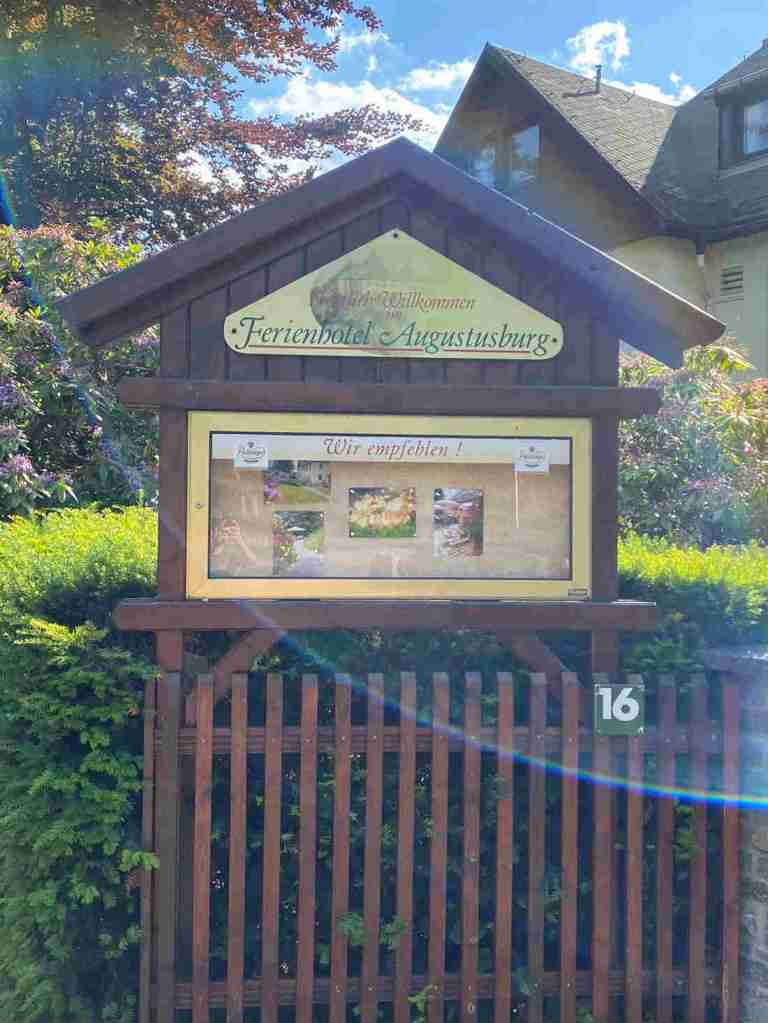
First order of business: return the key. We hike down an old forested footpath that wraps around the schloss, past interpretive panels of medieval hunts and bear-baiting, to find a hotel in town. The manager at the first place feigns complete ignorance of this noble key-return tradition, so we end up at Hotel DHL and return the key the American way: for a price.
That evening our hosts drive us into Chemnitz for dinner at a fancy restaurant next to the old opera house. The restaurant’s napkins would be white linen, if any existed. Instead, they follow the Chinese practice of “eat neat or wear your meat.” The boy and I have our first veal schnitzel, and Emilie impresses us all by ordering (and eating!) a German fish dish.
It appears that the waiter speaks neither English nor credit card, so I whisper to Joanna to sneak off to pay the bill before our hosts scoop us. She ignores this, and a couple of subsequent under-the-table shin kicks. She’s floored by surprise, when moments later, on cue, our generous hosts — the ones boarding and entertaining us for four days — sneak off to pay our bill.
After dinner, we visit the massive head of Karl Marx, but he doesn’t seem happy to see us.
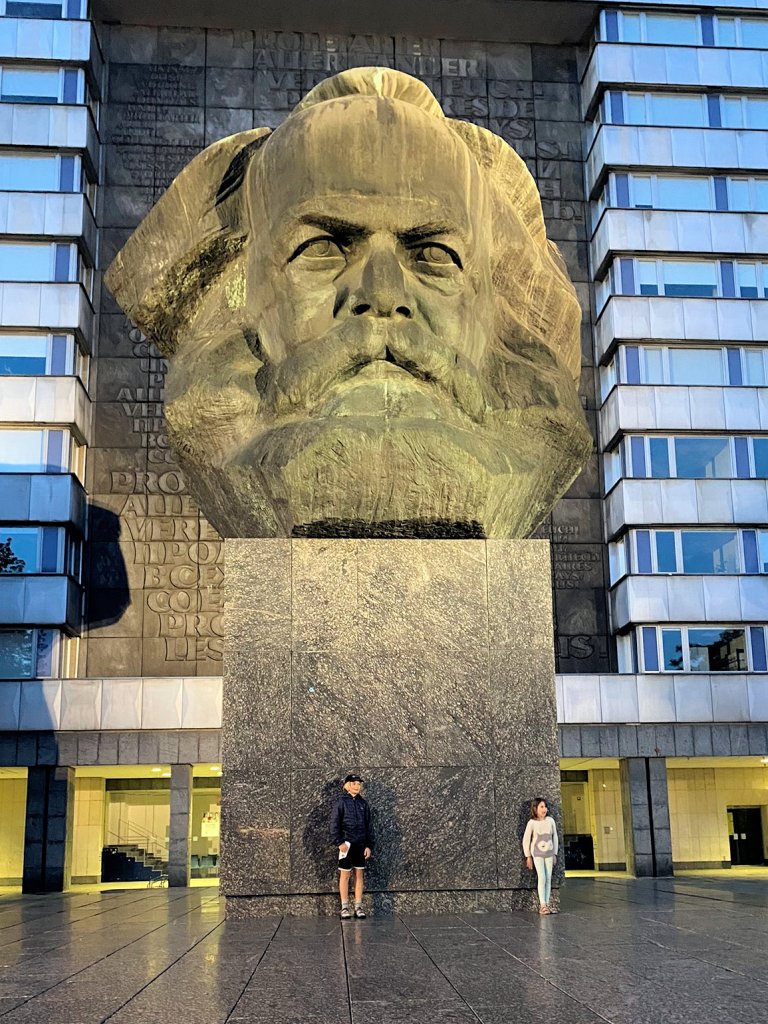
Knowing that I’ve been eating German food for over a week now, my connected devices anticipate my growing obesity and offer innovative solutions, like this breakthrough “home liposuction” technology.

In Augustusburg, our backyard is an enormous castle. There are three separate museums on the grounds, and we decide to do one per day.
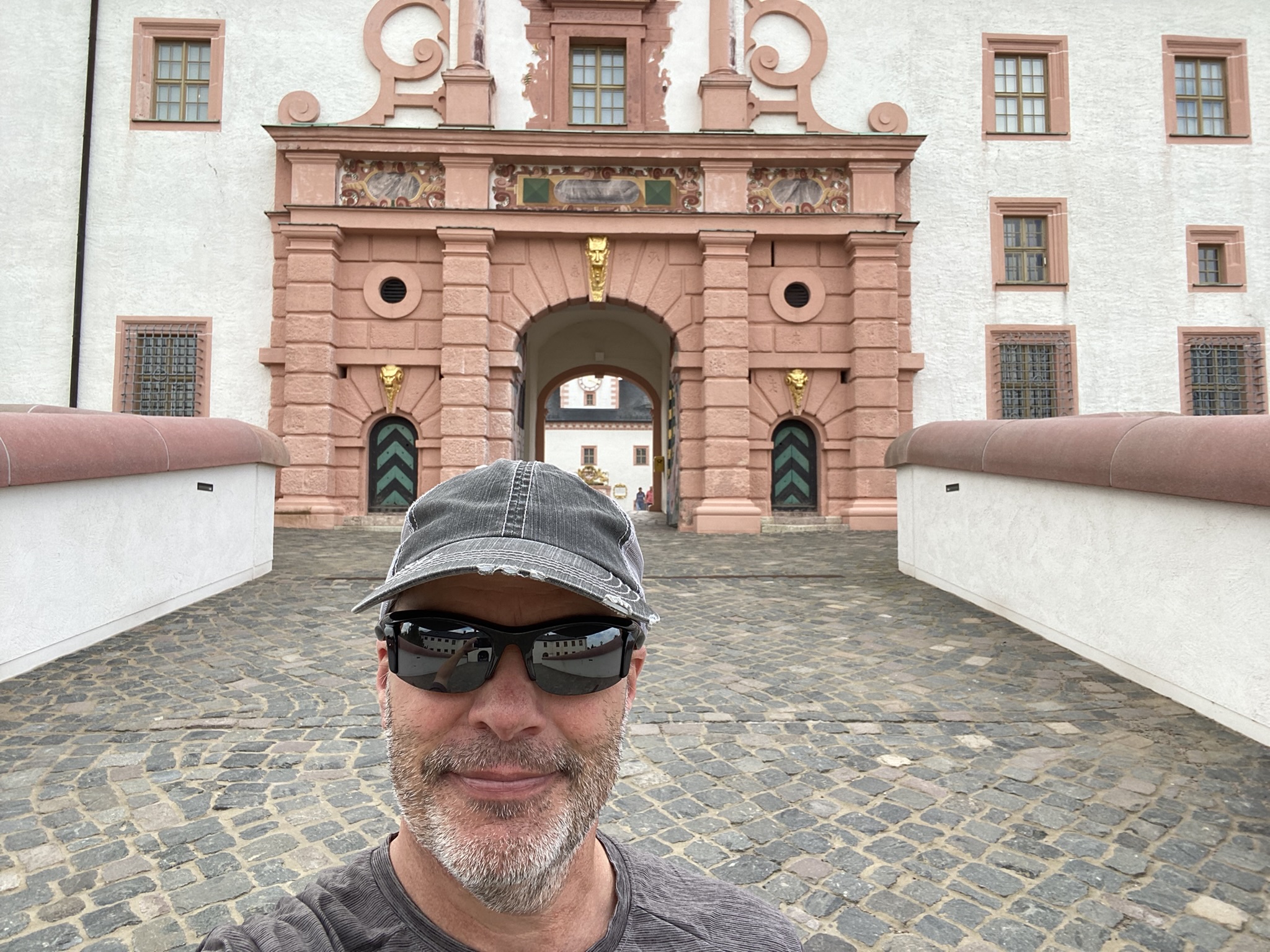
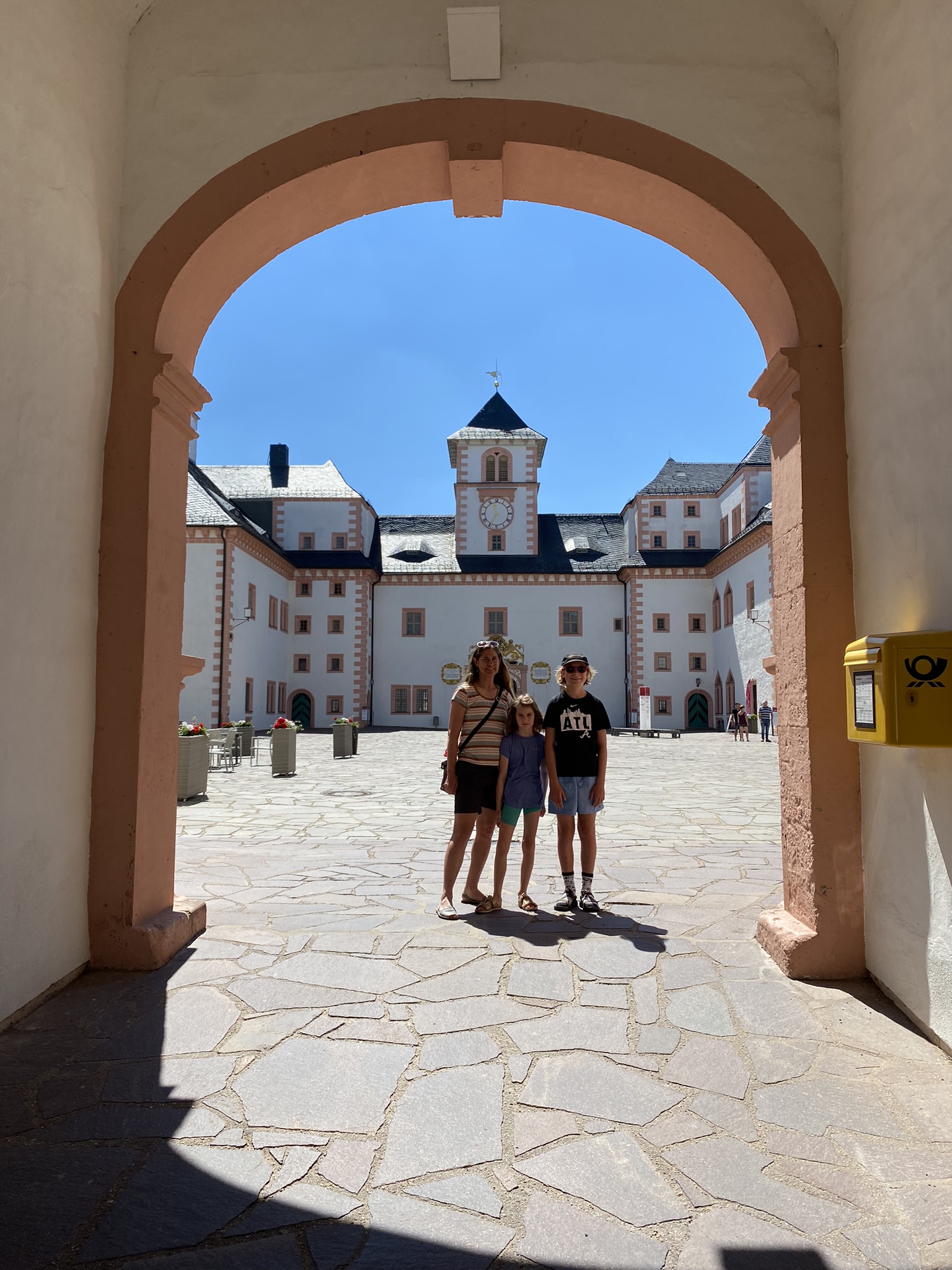
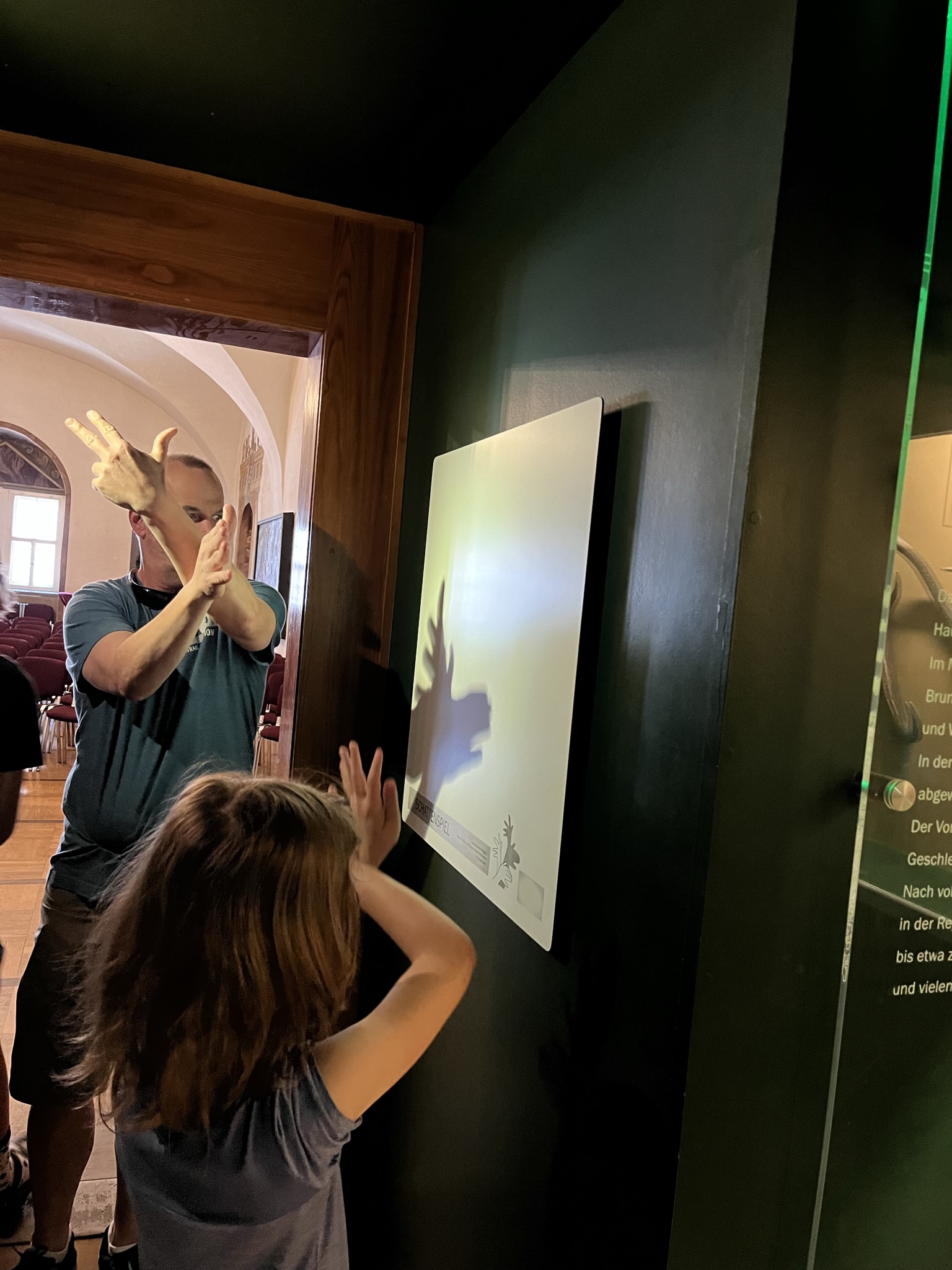
The first is a straight-forward historical museum of the castle and the medieval life it supported.
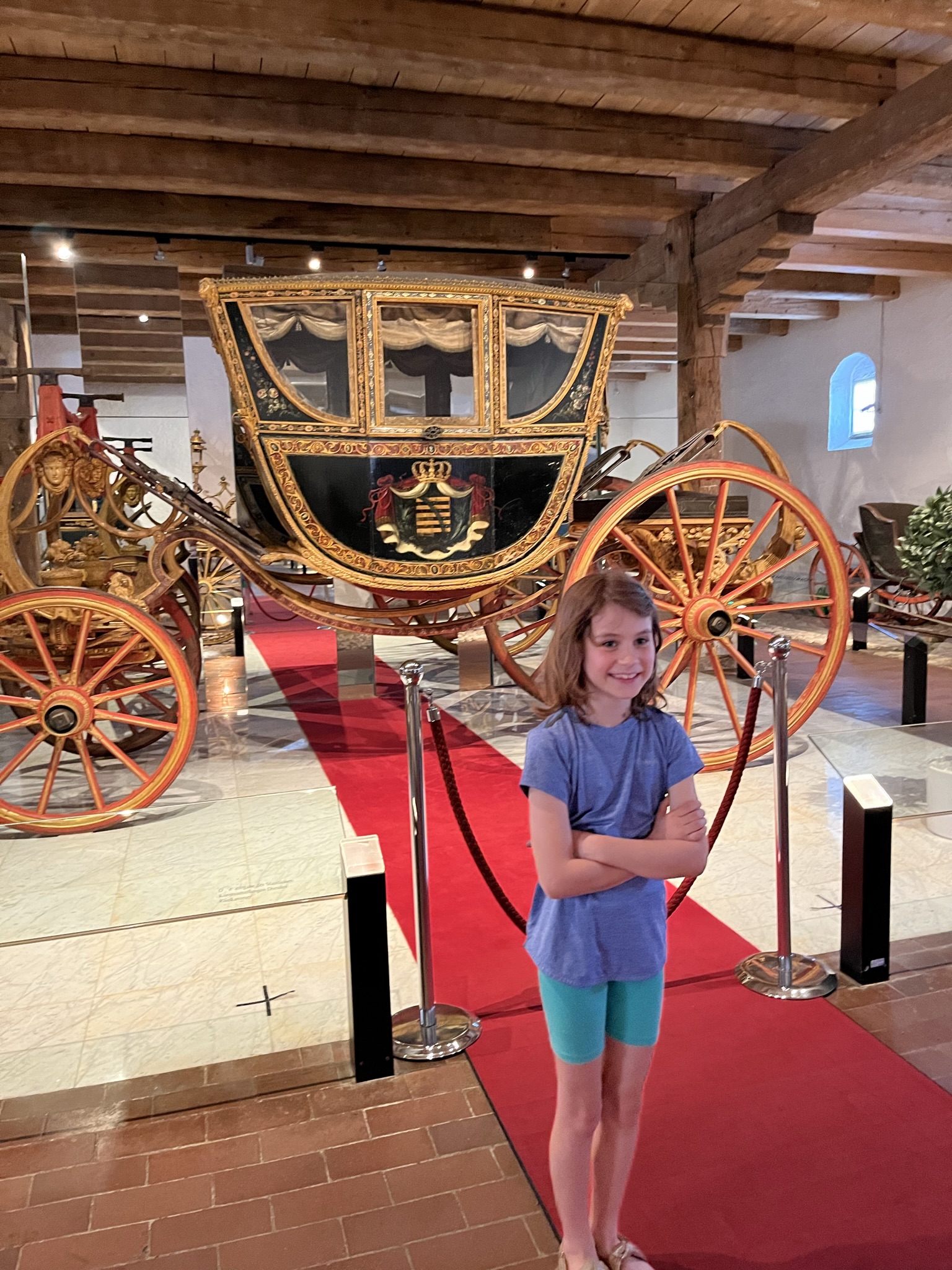
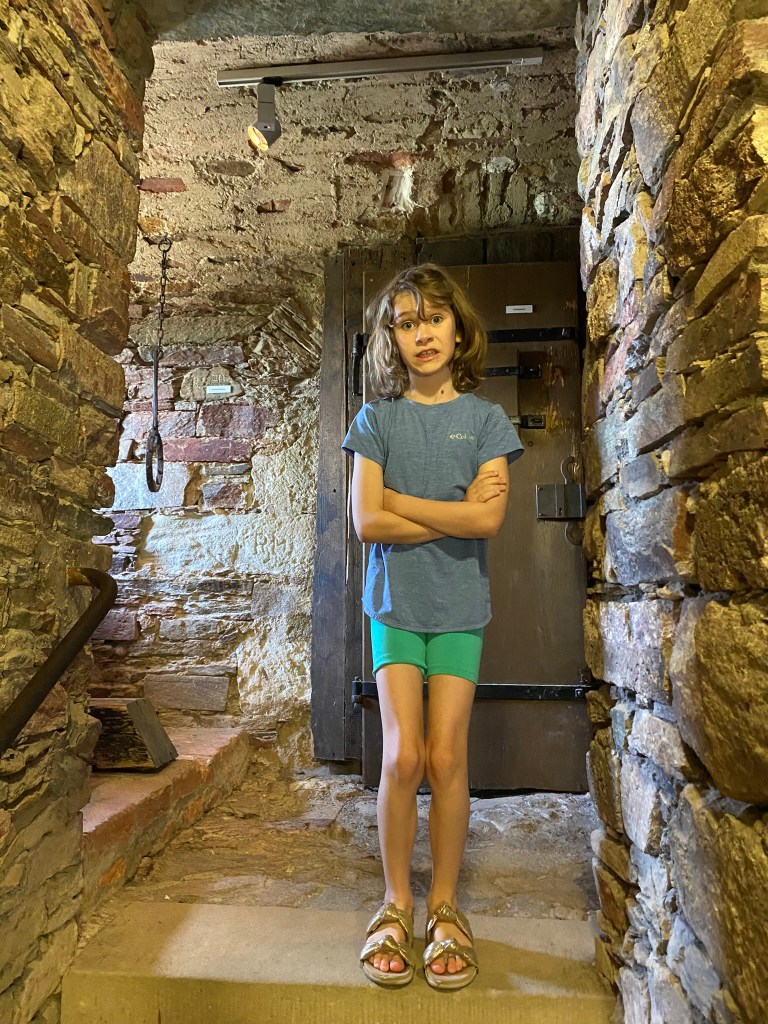
The route of this museum ends in a gruesome dungeon, which causes the family skin to crawl and stomach to turn. Here we find all the greatest hits of torture devices: stocks, racks, wheels, chopping blocks, the screws, iron maidens, etc. I wonder how this technology was so effectively disseminated across the pre-global world. Were there catalogues, traveling salesmen, industry experts? Or are humans so depraved that these things were independently invented? I briefly ponder how much more twisted medieval humanity was compared to us, then catch myself daydreaming about which modern politicians I’d like to invite for an extended visit. We later agree that an unusually rude server at the castle cafe deserved no worse than a short stint of wearing the shaming barrel with the head-hole cut through the top.
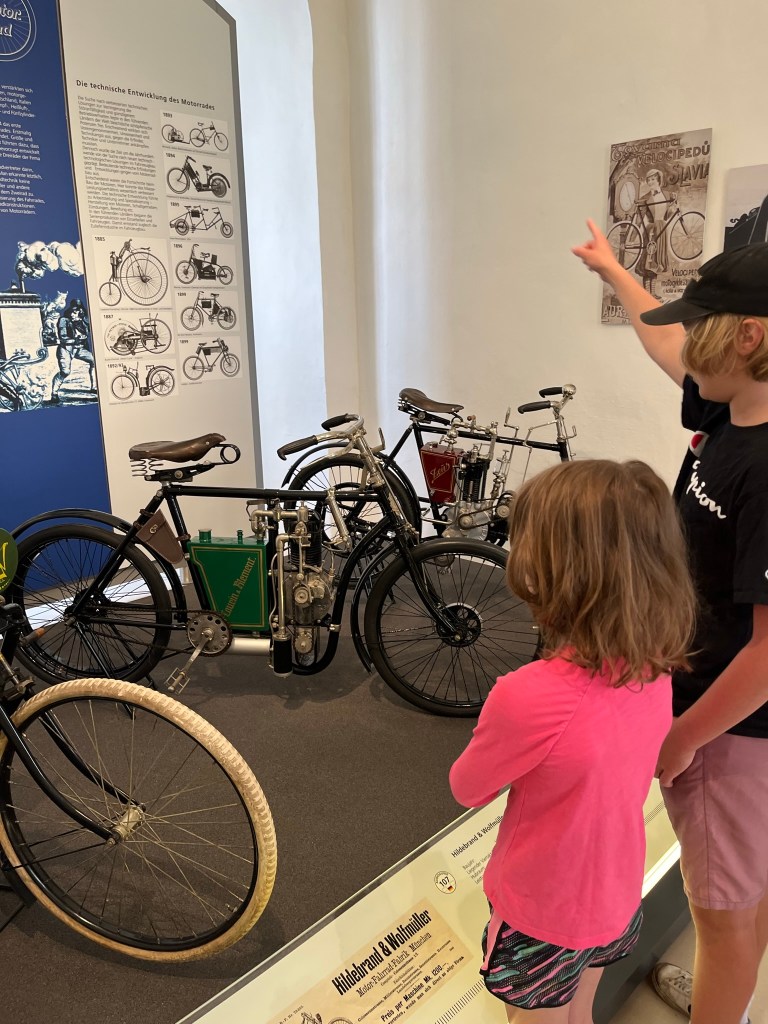
The second museum is a history of bicycles and motorcycles, which is as cool as it is random in this 16th century castle.
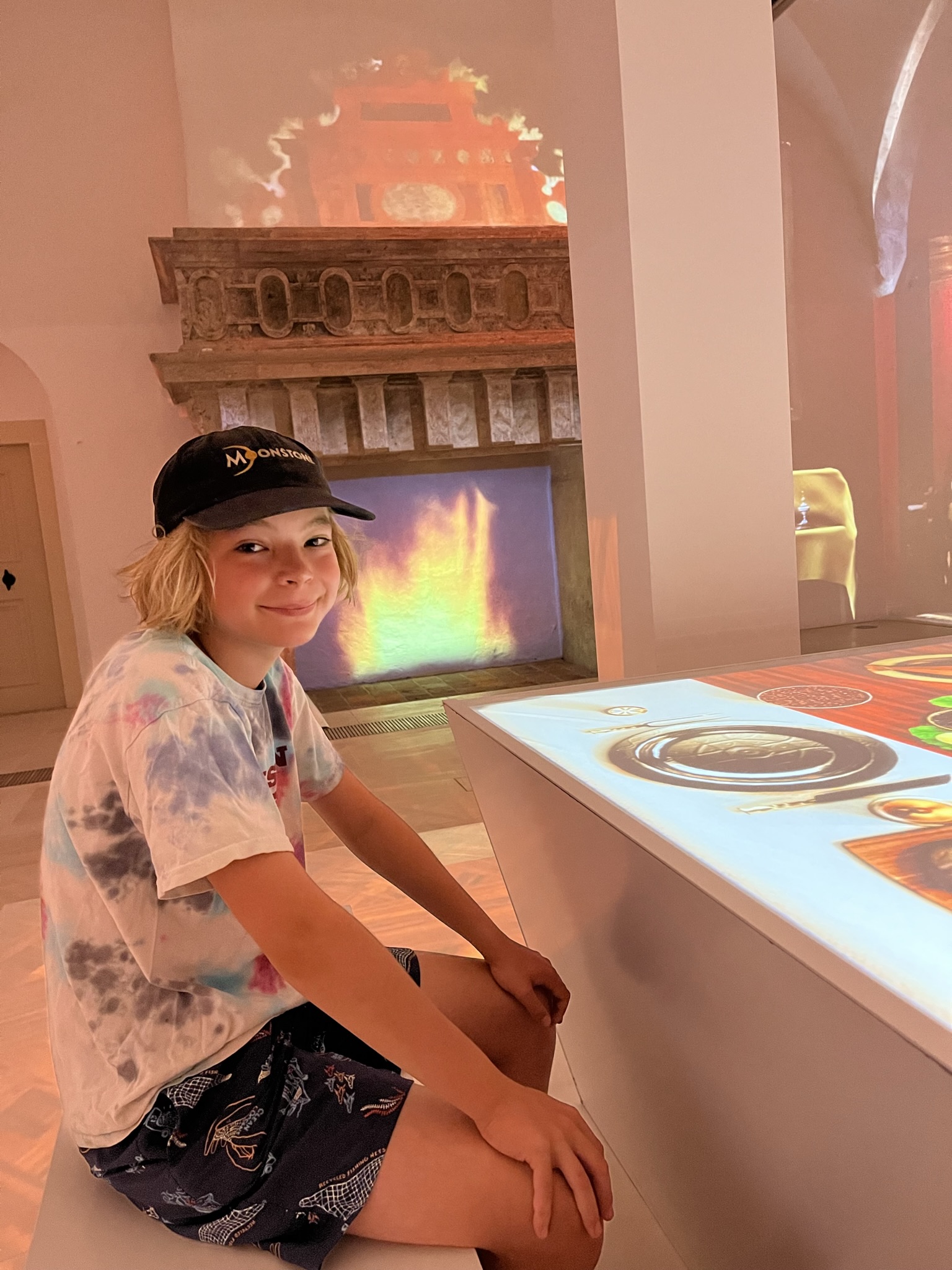
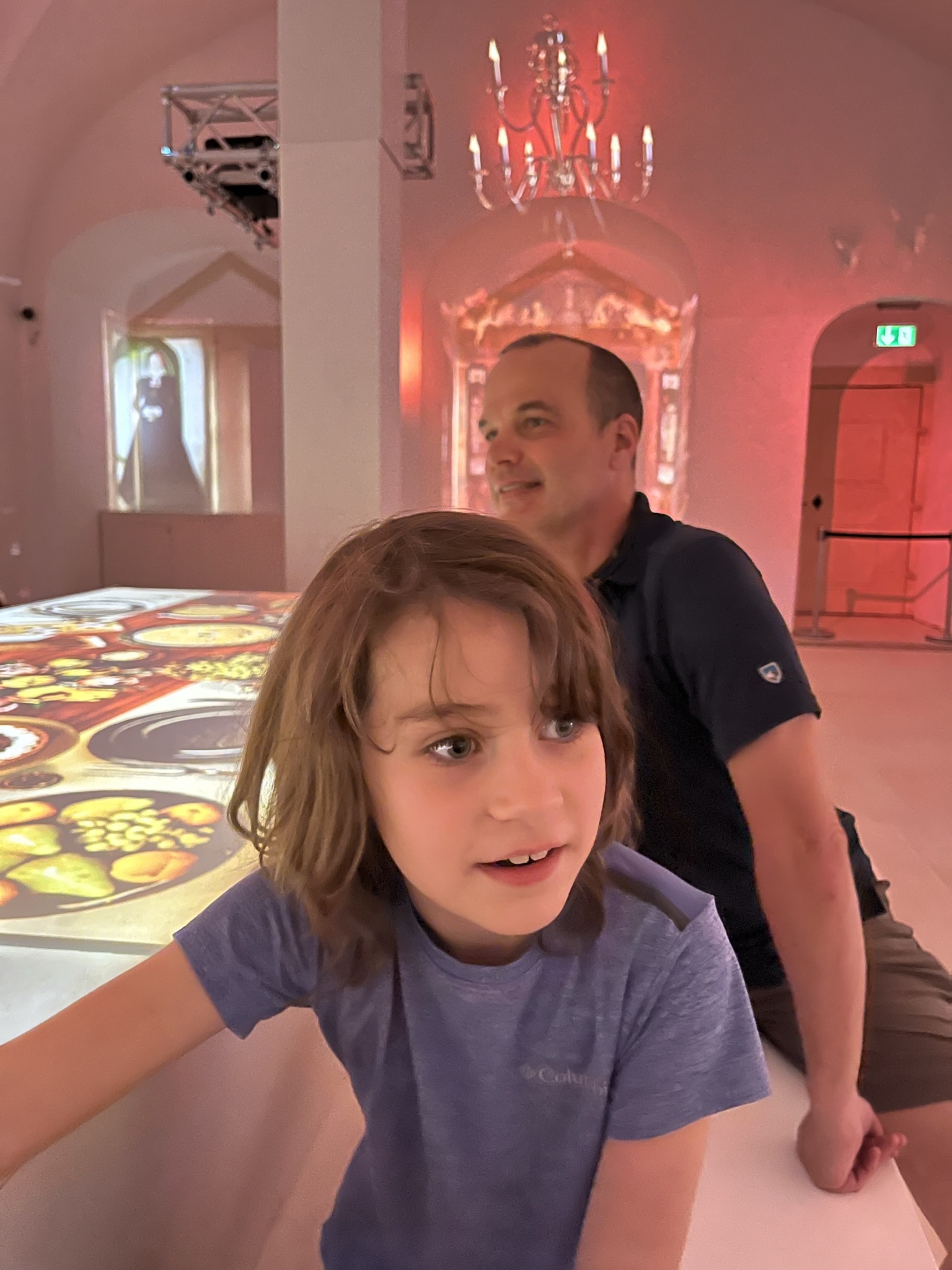
The last museum is a temporary exhibit on day-to-day castle life, with as grand finale, a room with 3-D projections of various castle scenes on the walls and table.
On our last full day in Augustusburg, we meet up with another friend from Joanna’s German past (and another lovely host) for breakfast and what turns out to be a meandering marathon walk around Chemnitz.
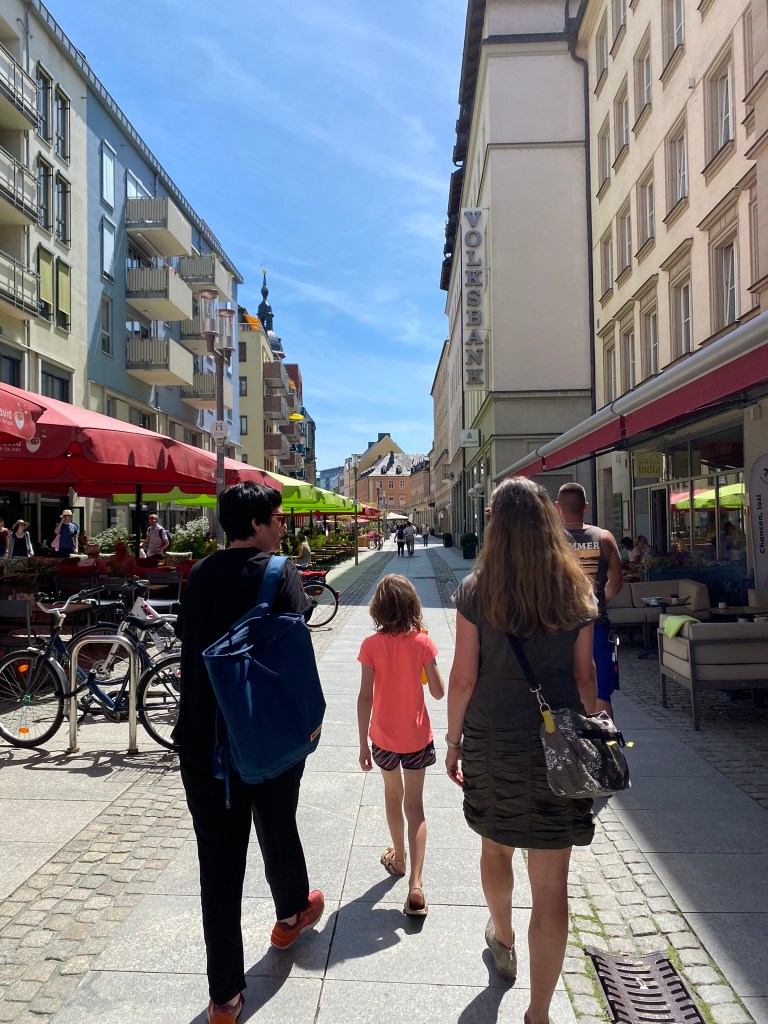
By the end of the day, Emilie is done — communicate only by angry hiss. Hours later, when her words return, our Augustusburg hosts politely ask about her day, and she declares, “I hated it, and it could die in a hole.”
The next morning we load the car for our return to Munich. Presumably in celebration of our riddance, our hosts bake us a fresh loaf of bread for the road. The smell alone makes us forget we just ate, and we rip it apart like jackals.
For a last schnitzel dinner, we stop in Ingolstadt. As proof some things will never improve, the car’s navigators direct us precisely into the heart of the pedestrian-only square in the old town, where, we’re told, police cameras enjoy taxing the ignorant.
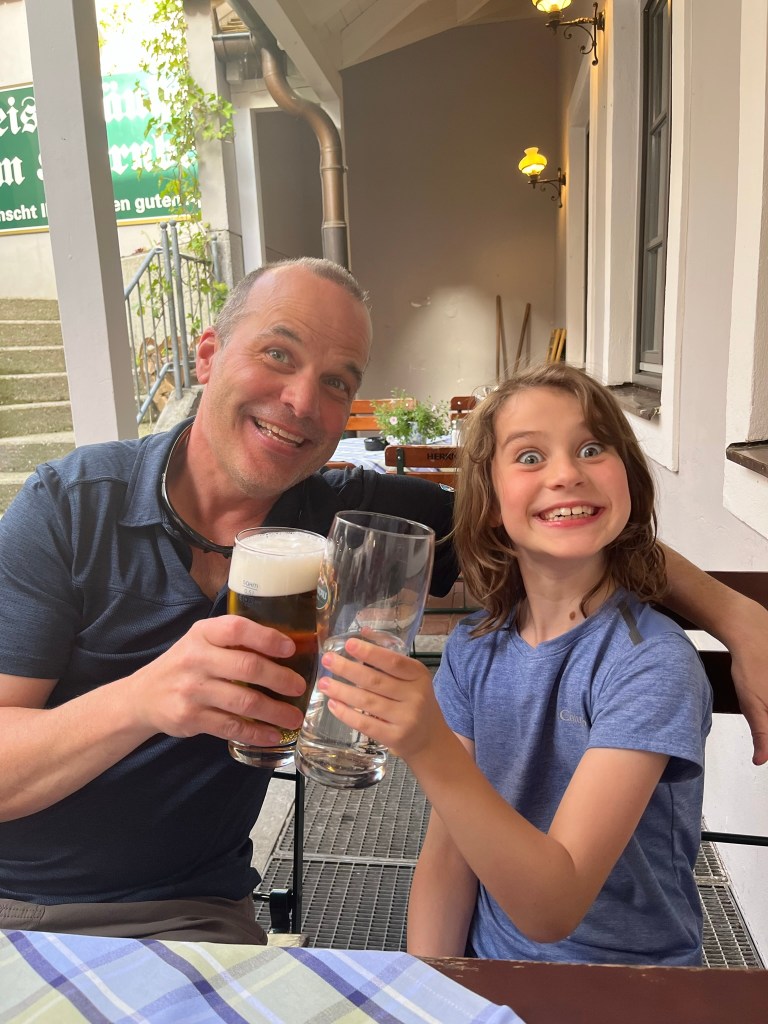
Sometime in the last 24 hours of our European adventure, each family member quietly offers me sincere, soul-melting thanks for planning and helping pull off the trip. It makes it easy to forgive the broken collective promise to gift me a Father’s Day window seat on the way home—and makes me more eager to start scheming the next adventure.
 Travels With Burma Jones