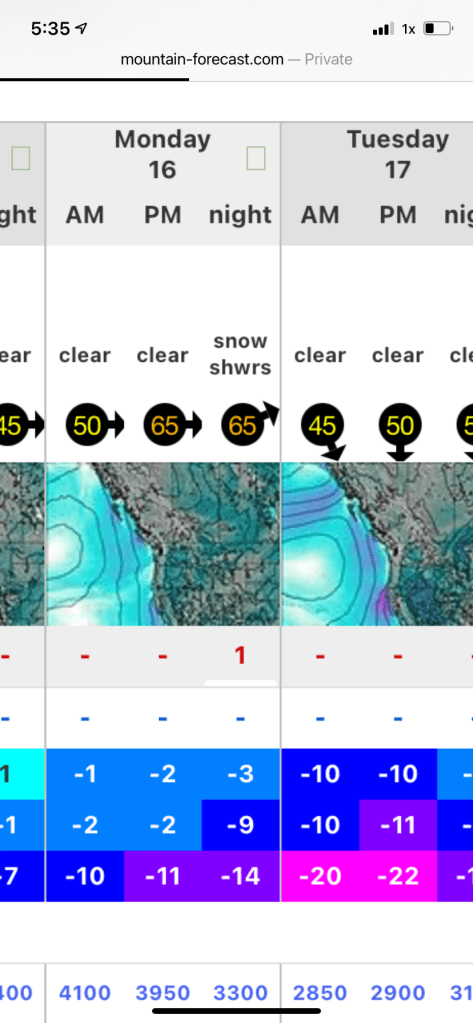
Sowing the seeds of pre-disappointment, the weather forecast looks grim, with winds not likely to allow a summit attempt.
Nat picks me up at SeaTac in a crappy Buick mini-SUV that’s greatest asset is how much Nat despises the gutless thing. We overnight in Puyallup, which is sweltering and thick with the acrid smoke of Pacific Northwest wildfires. Nat declares it hell, but I think of it as merely a stop in purgatory before we head off to meet the group on the road to Paradise, Washington.
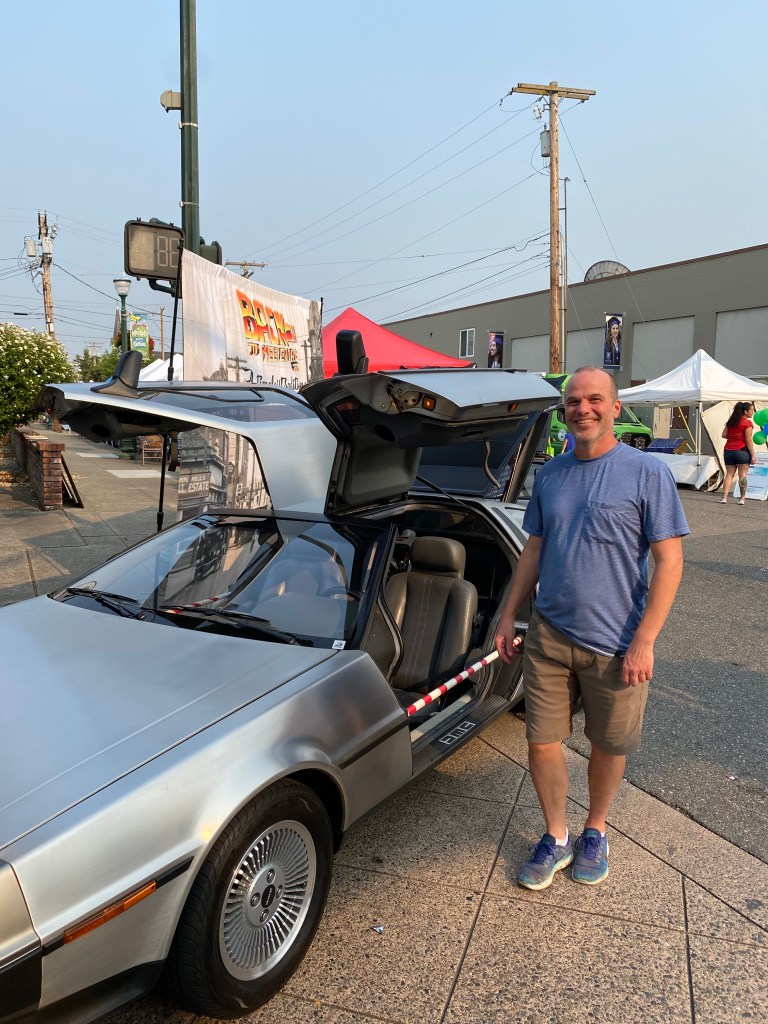
Downtown Puyallup is alive-ish with its annual Meeker Festival, and the crowd makes clear that Meeker is a proper noun and no adjective. Tweens with tats, and tots with rats. T-shirts and Democrats optional. A haggard heroin addict stumbles down the sidewalk on a bridge that is too stingy a height to offer the man sweet relief in exchange for a misstep. An aging rowdy struts Main Street in a bright orange denim jacket-turned-vest, presumably courtesy of his boot knife, with “CAN YOU SEE ME NOW ASSHOLE?” airbrushed on the back. Neither of us can solve the riddle, so we conclude that this simply reflects the American trend of aggressive insult replacing wit as the key to humor. (The fucking half-breed!) Also: there were Deloreans.
The next day I track and report the worsening weather forecast, which angers Nat and therefore amuses me. We choke back a mediocre hotel breakfast and idle in our room until boredom sends us to Ashford early. We check into our overpriced motel near the entrance to Rainier National Park, and the clerk tells us the place is haunted: In one room, the TV goes on and off by itself. In another, a guest was “groped by a spirit.” Later we figure that these tales were invented to rebrand the very-real, terrifying stains on the carpets and walls as “atmosphere.”
In the afternoon, we meet the guides and other clients for orientation and gear check. Our guides proclaim they are less pessimistic about the weather and assure that those depressing internet forecasts are notoriously inaccurate.
Back to the motel for kit fussing and final packing. I fight my unhealthy attachment to gear and make some tough final cuts, but I still end up hauling an unnecessarily heavy pack. (Note: turns out you don’t need spare batteries, if you never once turn on your GoPro.)
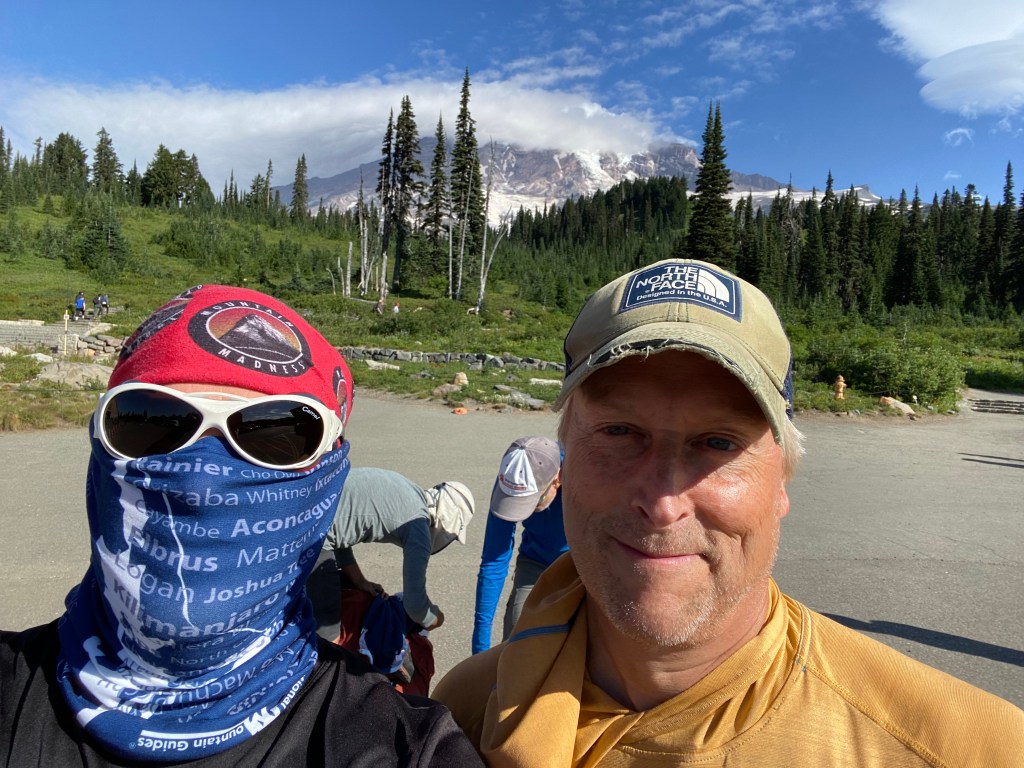
The next morning, in good spirits despite the lack of a groping by any, we load on the bus to Paradise, and anticipation makes the short drive seem endless. Obligatory group photos at the trailhead, and we’re off. After about an hour we begin to emerge above the clouds of (other) tourists that sock in Paradise each August.
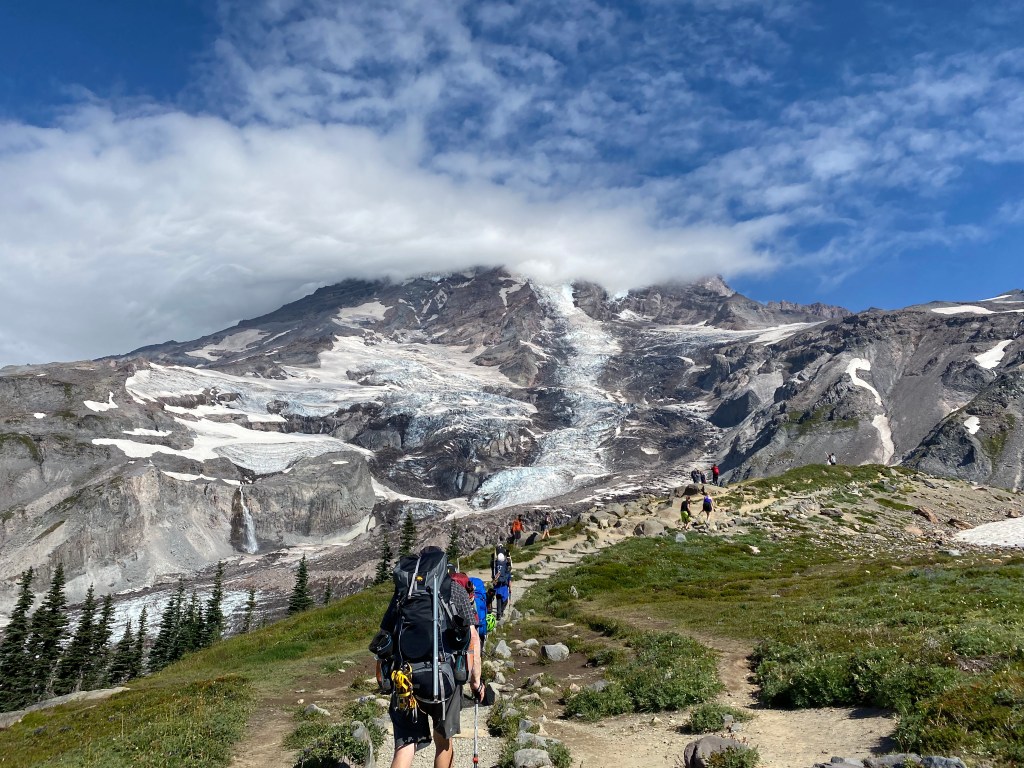
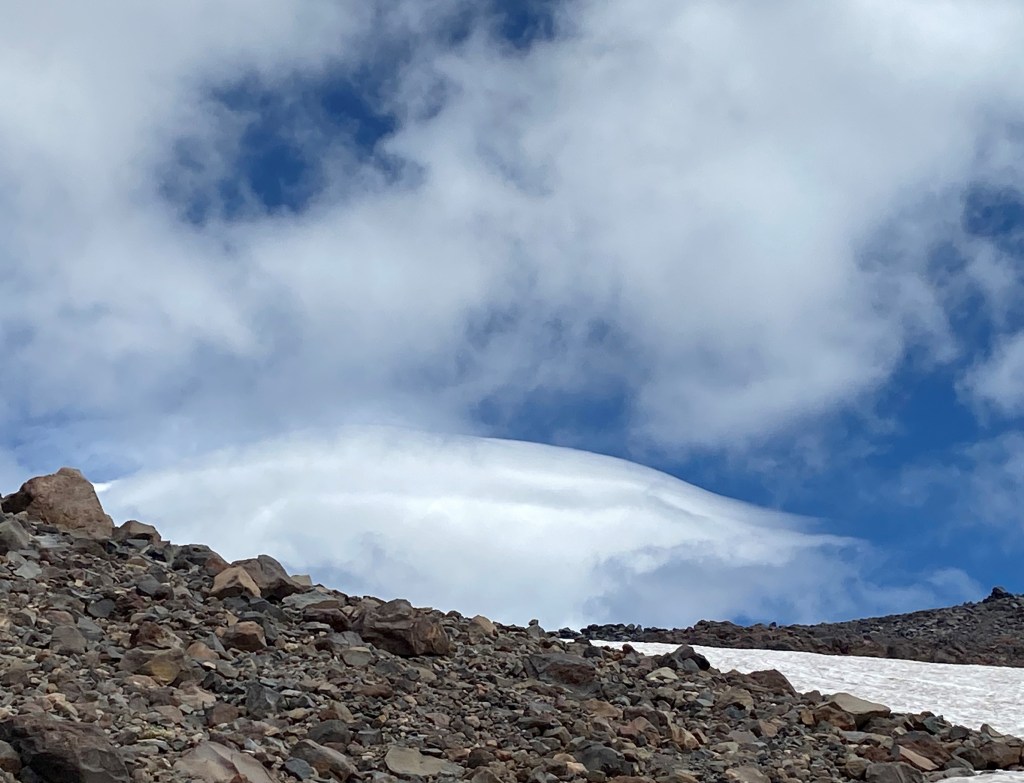
The views of Rainier and her sisters are amazing – only, one of our guides points out that a particular type of cloud blanketing the higher elevations of Rainier, a cumulus homunculus or something like that, means we will have hell to pay up there.
Once on the glacier, we follow the path of steps in firm melting snow, crunching along as if we’re climbing a dirty snow-cone. Occasional rivers of meltwater break the steepening path, exposing hard underlying ice, and we switch from comfortable trekking shoes to high-alpine boots. Mine are made for below-freezing and even sub-zero temperatures, and the reflected midday August sun makes for sweaty, swollen feet. Before long, the heat and my regrettable boot-adjustments introduce me to a young, ambitious hotspot on each heel.
Nat meets them too, but he is smarter than me and asks a guide for help before the nuisance becomes a problem. I’ve spent many hours climbing in my boots without discomfort, so this can’t be a real issue, my tired brain assures its little self.
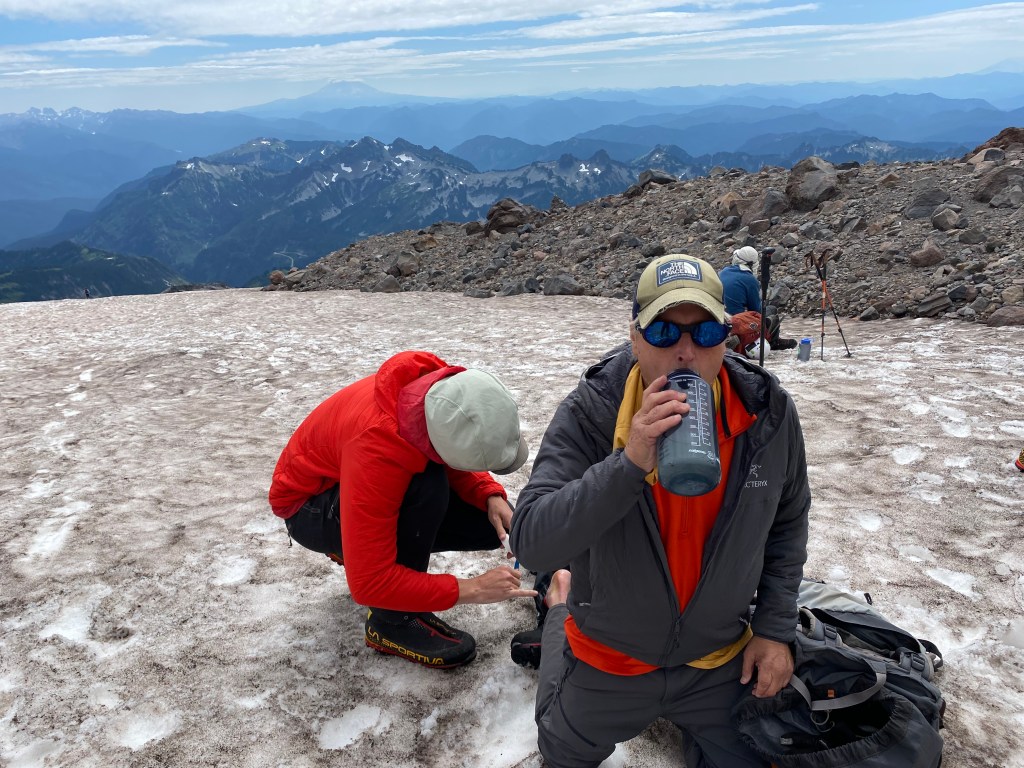
On we trudge. At our last break before camp Muir, we stop above a crevassed section on an exposed ridge. We’re into the cloud cover now, and the winds pick up. Everyone feels the cold. We cut the break short and hammer out the last bit to camp.
The usual caveats apply to this next section: I’m old, coddled, thin-skinned, and whiny, and I’m sure many climbers would love to sleep here. The Muir hut (IMG, not RMI side) is “the hole” in a POW camp. Solitary confinement, somewhere without an 8th Amendment, but with 7 other prisoners. The hut is a cold, windowless plywood box with a single bomb-shelter door secured by a massive iron bolt that slides only with two-handed persuasion. Gear and tired carcasses scatter about two tiers of an L-shaped bunk and generate a stagnant aroma of damp wool and bodily functions. Strangers are so close only a bigger wanker than me would attempt a pee bottle, and I guess I’m not bested, because the night of mandatory snoring is punctuated by crashing metal of the door and latch, once on an inmate’s way out to the piss-shack and once on return. Nat later admits he alone proudly performs the piss-walk symphony three times that night.
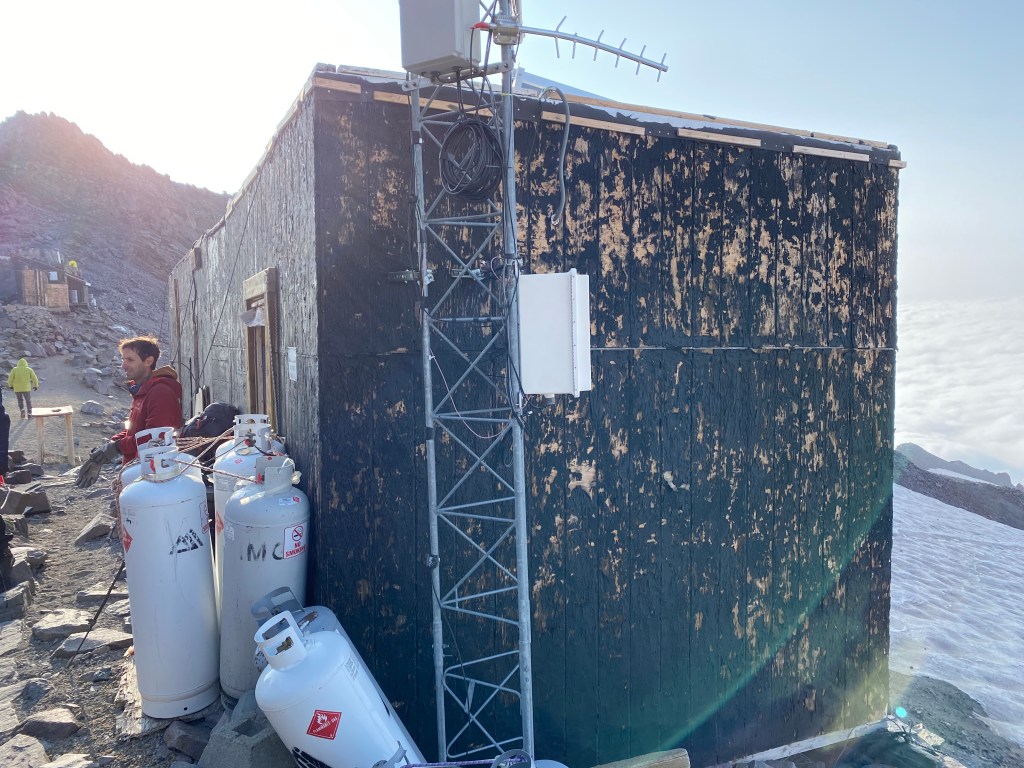
Our debt to society repaid, morning brings hot breakfast, sunshine, and a useful refresher course on traveling in glacier rope-teams. In the afternoon, we head across the Cowlitz glacier and up through Cathedral Gap to our high camp at Ingraham Flats.
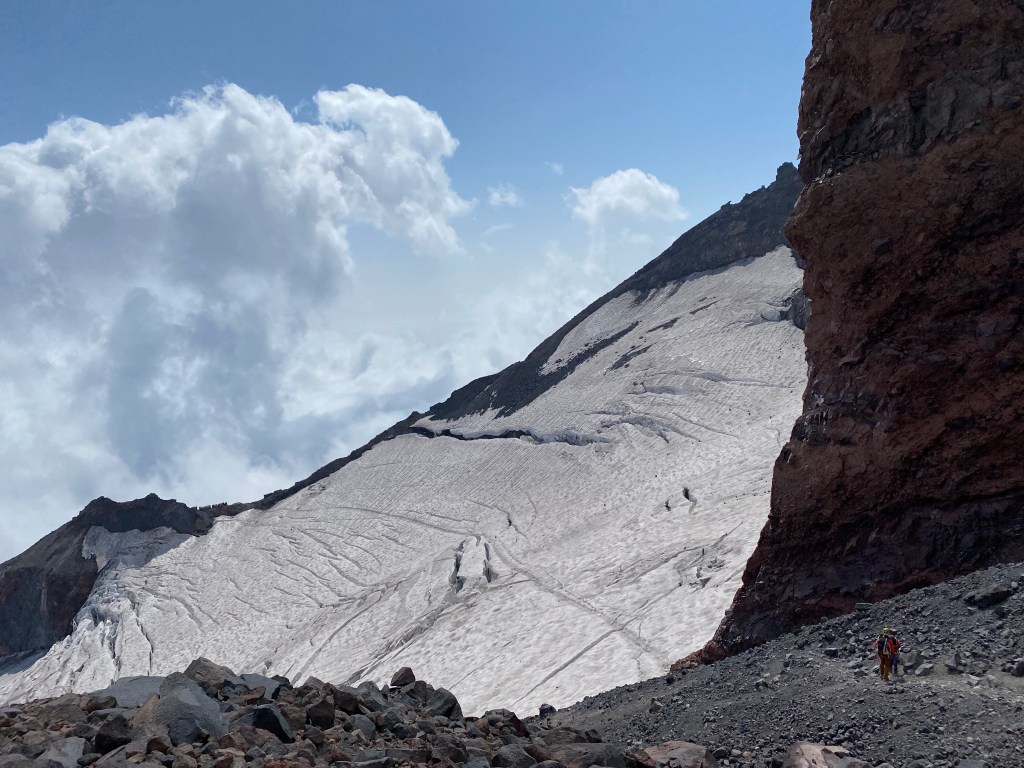
The Flats is a compression zone where the glacier presses on itself from above and below—discouraging crevasse formation and offering relative shelter from rockfall and avalanche. A safe place to camp, despite being the exact site of Rainier’s deadliest climbing disaster: in 1981, a wall of ice 800 feet tall and 300 feet wide sheared off the Ingraham Glacier and obliterated everything in its path. Eleven climbers had no chance; their bodies remain entombed beneath tons of ice.
Blissfully unaware of that history and relieved to be free of the Muir hut, Nat and I squirm into our cozy three-man tent (rated for three hobbit florensiensis, apparently).
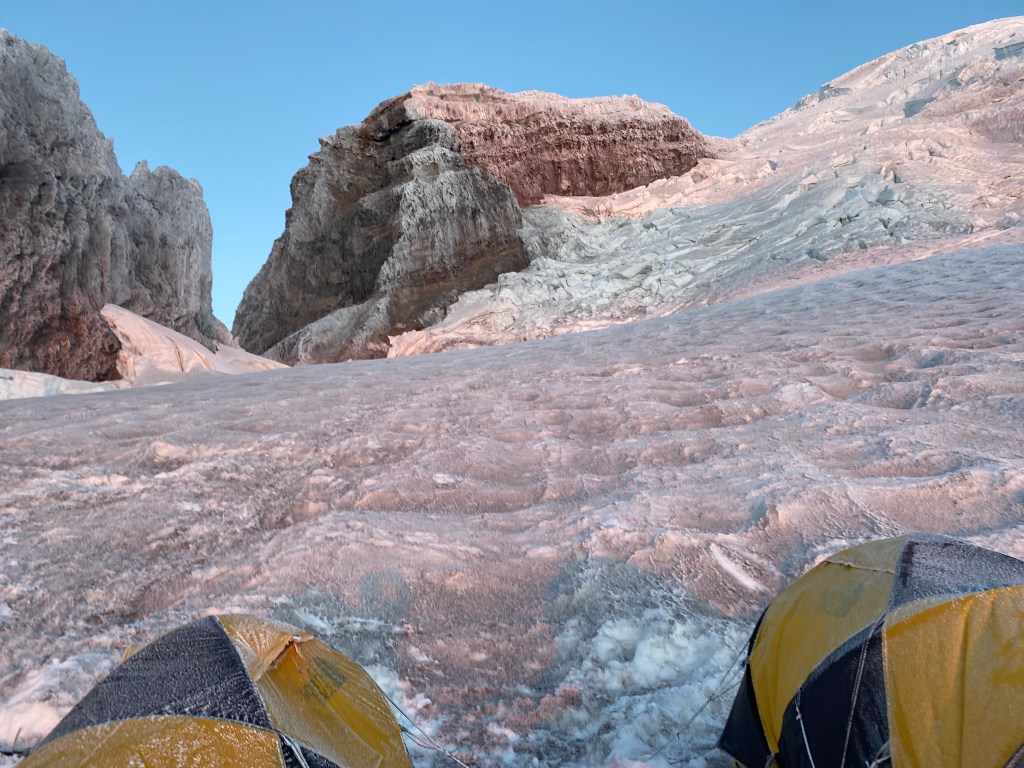
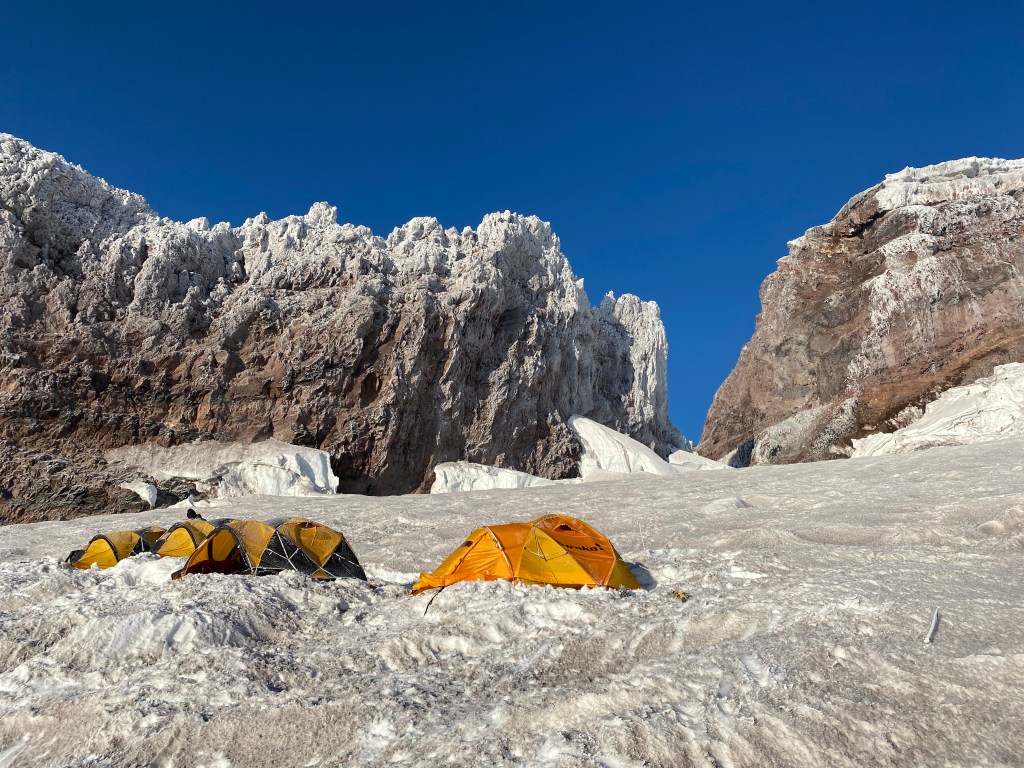
Our welcome mat looks directly over Little Tahoma Peak, which some consider the second highest peak in Washington after Rainier.
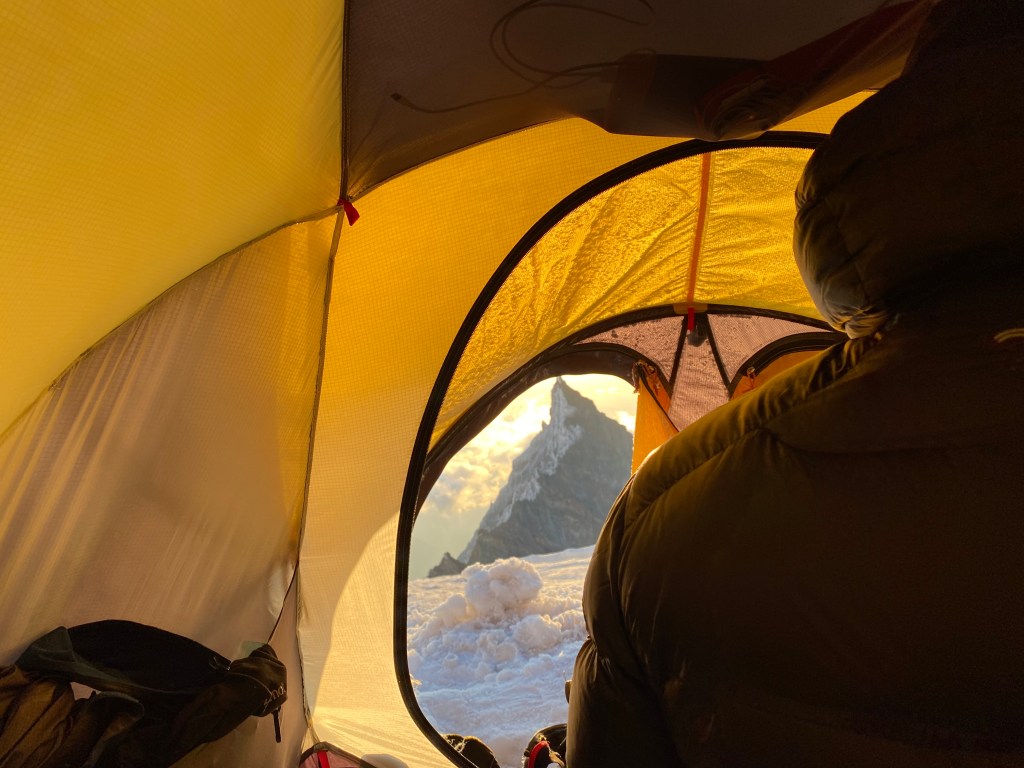
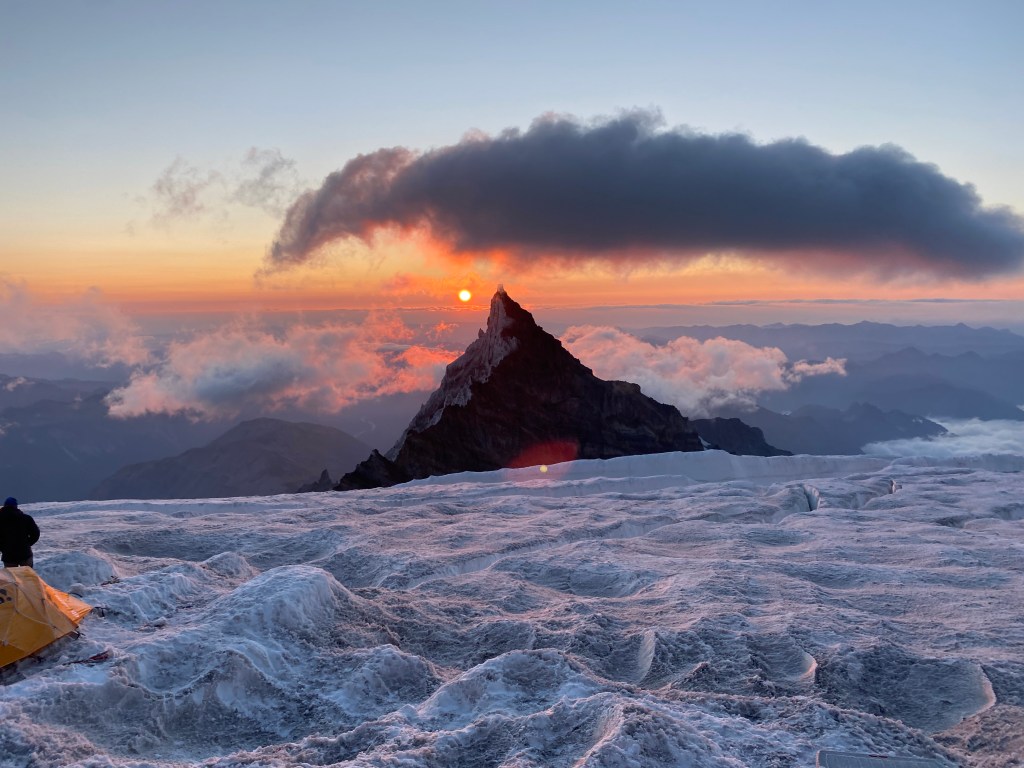
Clouds and wind grow and lace the tent fly with rime, which body heat converts to a fine mist inside. Any accidental bump of tent against fly is punished with a cold splash. After a short rest, we head to early dinner.
Each bench in the kitchen tent at our high camp is a sleeping pad covering an ice-shelf cut into the hard pack. At the high end of the rectangle is the camp stove. The other end slopes down towards tent flaps that struggle to keep out a biting, dusk wind. Two guides duck in through the opening, returning from an last-ditch attempt to build a summit route around the backside of Disappointment Cleaver, an unbelievably challenging task for even a dozen route-setters.
After a summer of unprecedented heat on Rainier, the glacier’s scar that gives the Cleaver its name – like a great knife of rock hacking through the underside of its glaciated skin. That scar has grown to reveal wide new stretches of loose rock and boulders. At the start of summit night in a normal year, climbers hurry across a sketchy section below exposed rock known as the Bowling Alley, and each year there are a few pin strikes and many close calls. Whispered guide gossip had already betrayed what is now confirmed: all guide services have shut the Cleaver route down for the season. But maybe there’s an alternate route?
There’s a long awkward silence as our returning guides settle into their downhill seats. Finally, I throw out a simple, open-ended “Any news?” Immediately, two guides on cook duty shriek in stereo at some trampled taboo and insist that they’ll let us know later what’s going on – all of which was a pretty clear indication of how alternate route-setting went. (Perhaps our guides — all top-notch, by the way — have learned that more casual or open information sharing can trigger certain client personalities to bemoan the futility of the expedition or even squawk about a refund. Fair enough.) In any event, there will be no summit attempt on this trip. As it turns out, we learn, the wind and visibility this night would not have allowed an attempt on even the healthiest of Cleavers. The silver lining: we get to sleep in.
Morning brings wind, cold, and spectacular views. The group decides to skip breakfast in high camp and head for Camp Muir for pancakes.
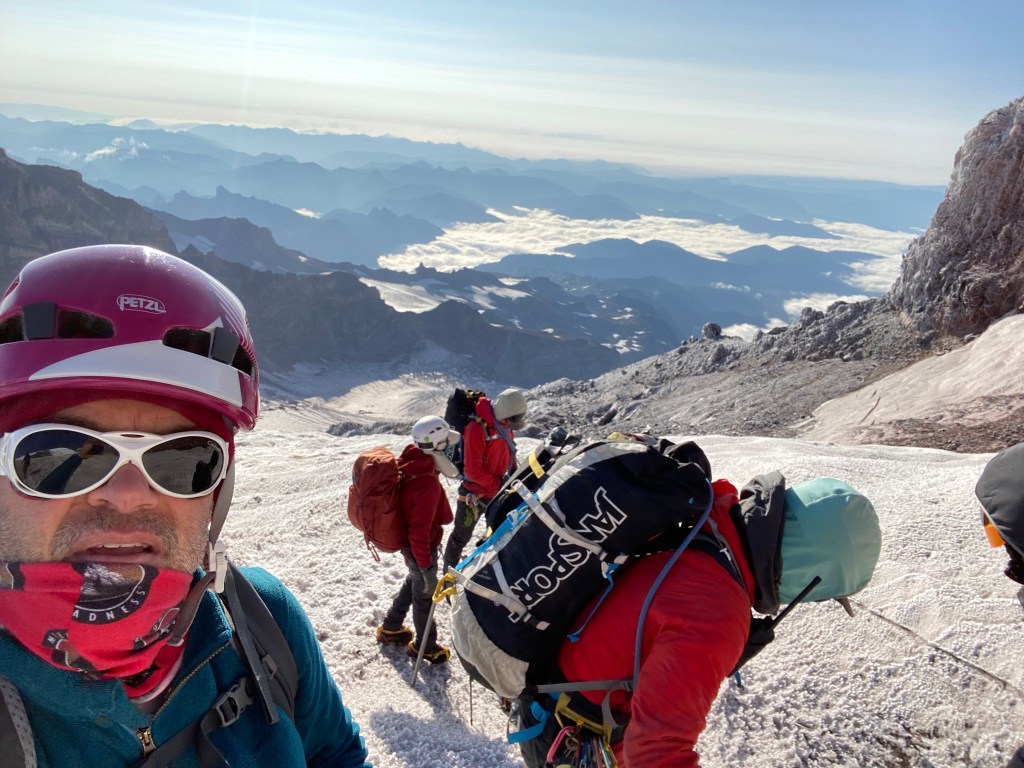
If not on the Cleaver, Nat finds his disappointment in a lever – the one at the back of his crampons that snaps up to fasten tightly to the heel. His refuses engagement and then slices into a bare finger, which produces echoing yodels of profanity and an unusually fruitful supply of blood, the drops of which are frighteningly framed and preserved on the white canvas of snow, a la Jackson “the Ripper” Pollack. A guide jumps on the first aid, and soon we’re ready to descend, without taking “leave no trace” too literally under the circumstances.
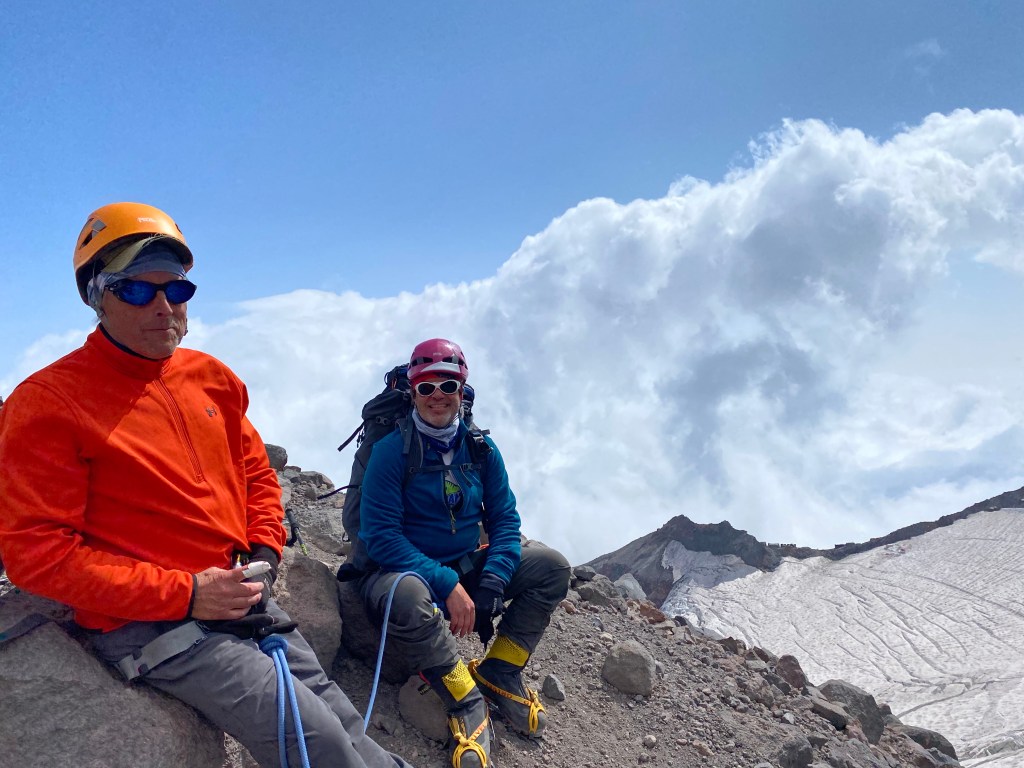
At Muir, a guide from another team reports that winds the prior night ripped an unanchored tent off its picket and launched it like a kite. He managed to reel it in, but conditions forced him to sardine into a colleague’s tent for the night.
After breakfast, we load up and amble down towards Paradise. Somewhere along the way, my heels acknowledge the end of the lifecycle of a blister: from newborn hot spot, to budding cushion, to mature pus-bag, to *pop* giving up the liquid ghost, to a twisting, tearing flap of dead and dying skin, to a pair of matching trip souvenirs. As I change back from mountaineering boots to comfortable trekking shoes, I consider the epic suck that an additional 5-8 hours of a summit round-trip would have bestowed on these feet: maybe I shouldn’t be disappointed to be cut short by the Cleaver this time.
 Travels With Burma Jones
One reply on “Rainier: Disappointment Cleaver”
I deny everything
LikeLike