Today is a hard day. “White wind,” Ossy calls it—windy mist that drenches everything in its path. Internet forecasts for Cayambe, presumably algorithmic analyses of residual coca tea, cheerfully promise only “light humidity,” which becomes a running joke for the trip.
Courtesy Carl C
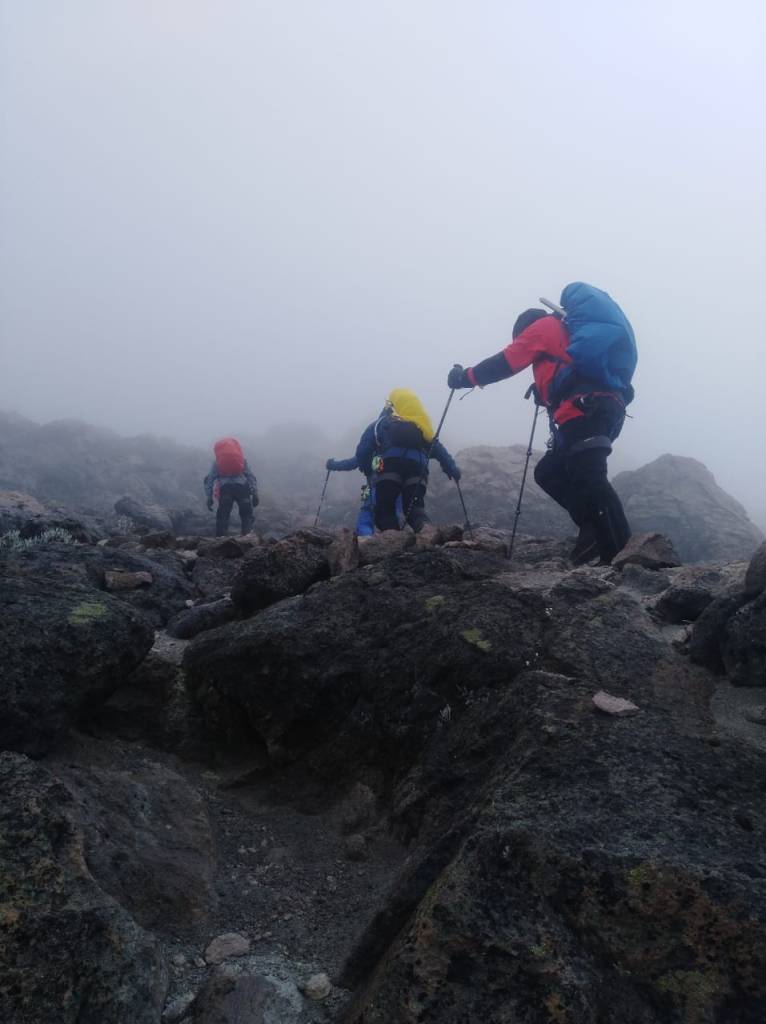
After breakfast, we head up the main summit route, which begins with a brutally steep hour, including a section of four-footed scrambling. Our pace today is much faster than two days ago, and I am suffering. I have an altitude headache, I’m still short on sleep, and it’s demoralizing to work this hard so early on the summit path.
Courtesy Ossy F
The wind is fierce—consistently 30+ mph with much higher gusts. Mist coats my glasses, destroying visibility and morale. My rainproof layers are solid, but I’m hot in the torso and cold in the hands.

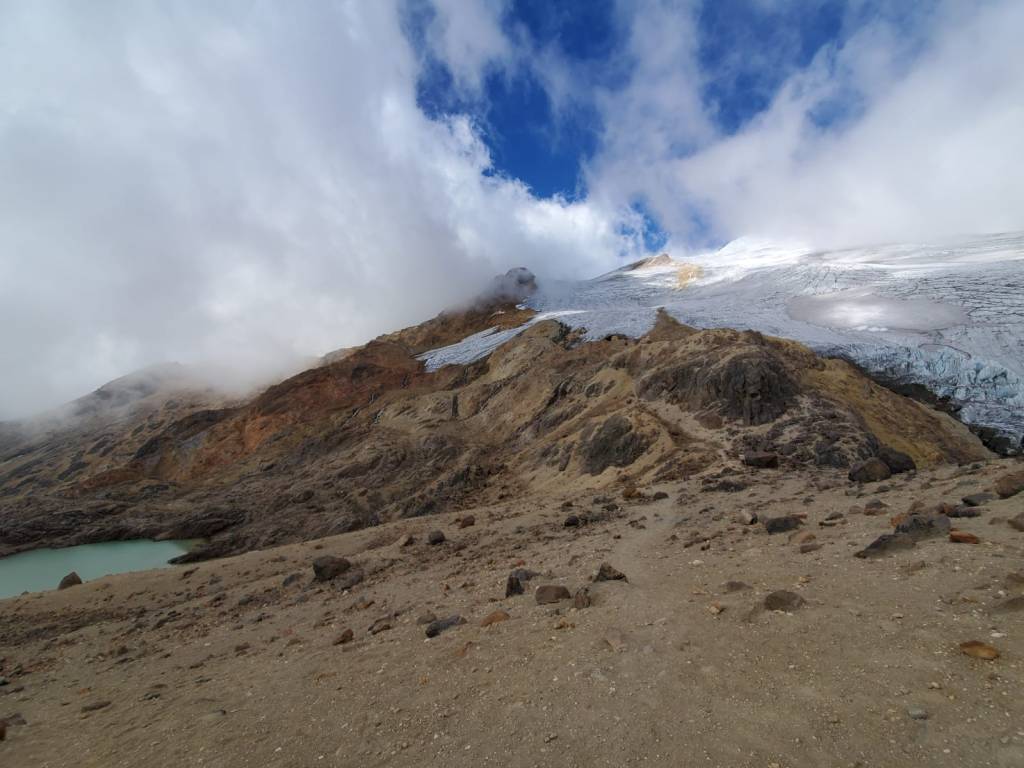
All this in the first hour of what would likely be a 9-10 hour effort on summit day. We drop down by a small lake where we are protected from the wind, at the cost of giving up altitude we’d have to earn back with interest. At the glacier line, Ossy stops the group and says he and our other guide Frank are both 50-50 on whether we should continue.
Courtesy Ossy F
If this were summit night, Ossy says, he would turn us around. Other teams and other guides would continue in these conditions, but they’d be unsafe. Even if the cold and wetness didn’t compromise the climbers, they would absolutely compromise the ropes—once wet, they freeze solid, and ascenders, prusiks, and rescue gear become decorative at best. At that point, you are simply wearing the costume of a climber. (I recall pictures and videos of climbers like this, with icicles dangling from hats and rime coating outer layers.). It is experience and judgment like this that makes me grateful we paid for Mountain Madness, and for guides like Ossy and Pablo.
Ossy asks whether we want to turn back to the hut now, or put on crampons and climb the glacier another hour or so before coming down the main summit trail. I ask if we could climb for 20 minutes and reevaluate, and the group agrees. We struggle to get on crampons, having to take off gloves and expose bare skin to the cold. Then we split into two three-man rope teams. Our team is Ossy in front, me in the middle, and Jeff at the rear. Ossy teaches us how to climb ice as a unit—how far to space out, how not to step on the rope, how to switch your ice-axe to the uphill hand when the leader tacks—and off we go. Twenty minutes come and go without comment. We just keep grinding upward.
An hour later, we reach the top of the glacier stretch and loop clockwise toward the main trail. Coming off the ice, we keep our crampons on to avoid slipping on a muddy section. In these nasty conditions, our crampons are caked in wet, sticky mud by the time they go back into their bags. Everything is soaked and coated: crampons, pack, shoes, shell pants below the knee. But at least we are heading the right direction: down. For moments, the clouds break, and there are some breathtaking views. I take a few shots on my iPhone, and later realize I accidentally take a 26-minute video of the inside of my jacket pocket, draining its battery to the level of my own.

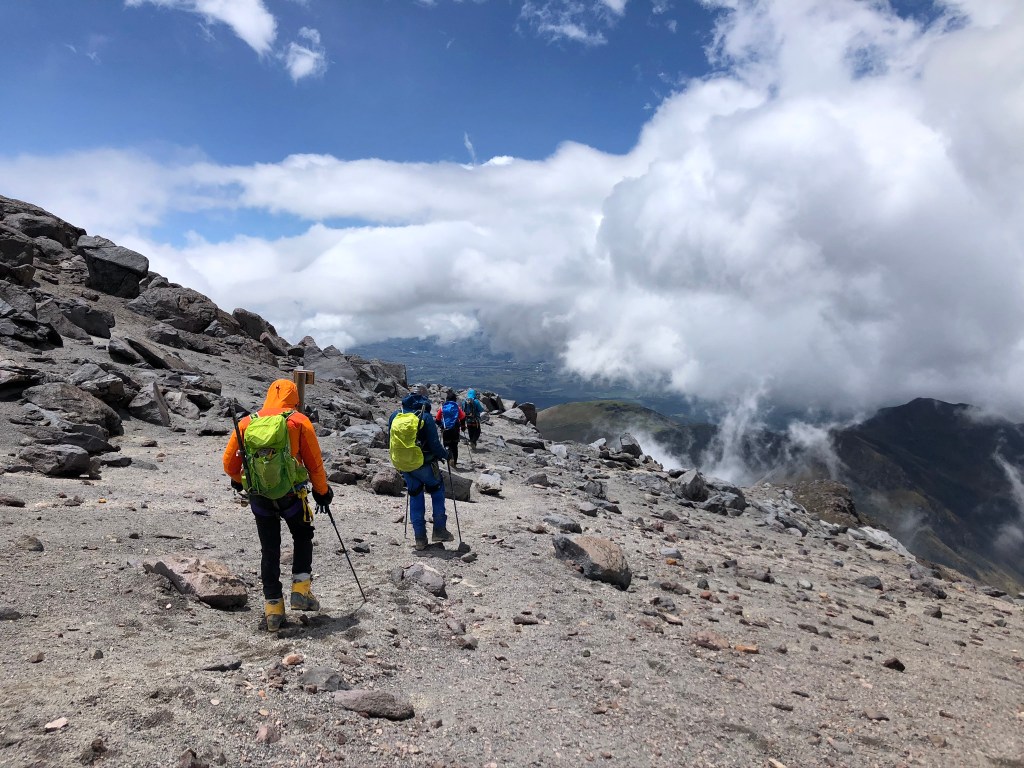
We tear down a scramble section and through the scree toward the hut. Now part of a conditioned response, proximity to the odious hut bathroom triggers a final outdoor leak behind some rocks. The sun comes out, and I shake off my wet things and let my sweaty base layers dry. After I inhale a bread-rolled cheese blunt, we gather our gear and head down to the lower hut, where morale is certain to rebound.
 Travels With Burma Jones