Courtesy Carl C
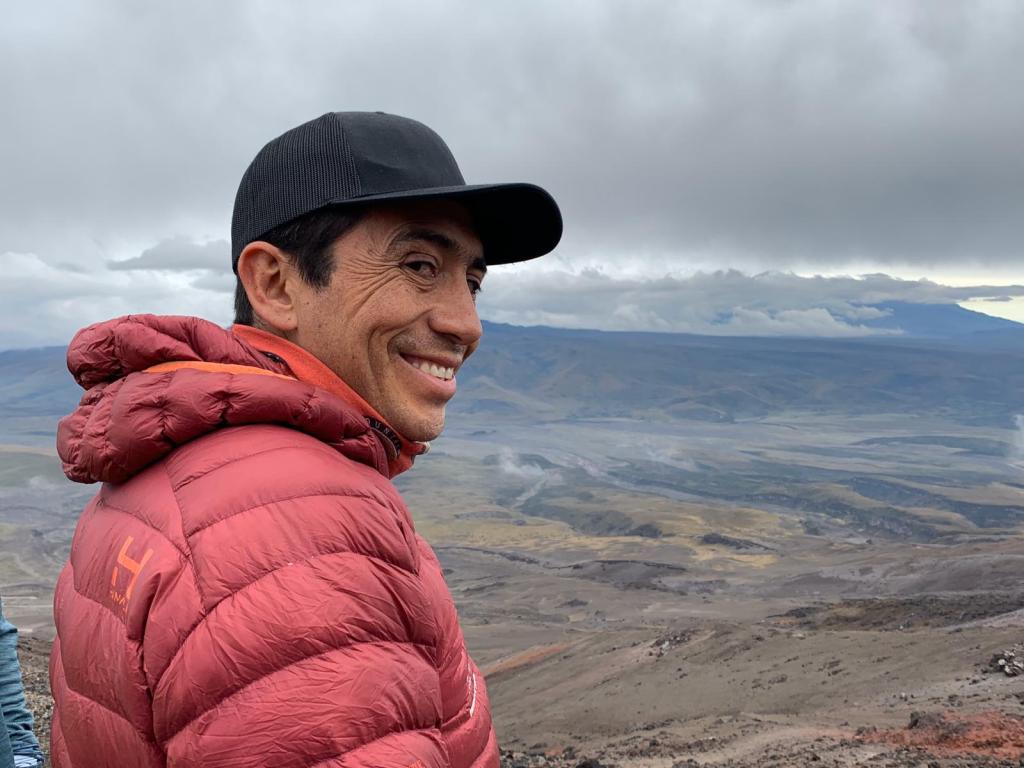
At breakfast, we meet Carl, another climber. It’s his second time in Ecuador, and he has already climbed Cayambe and Chimborazo. He is back primarily for Cotopaxi, which was too active to attempt in his prior trip. Carl catches a barely-audible pan-flute rendition of “The Sounds of Silence” as it tries to worm into my ear.
Osssy joins us and immediately brings a massive boost in excitement about the trip. Ossy has summited Everest multiple times, including without supplemental oxygen. He has a number of other firsts, including the first South American to complete Cassin Ridge on Denali. He’ll be doing both K2 and Everest again this season. He just returned from trips in Antarctica and Aconcagua.
Courtesy Katie P
Quito city tour
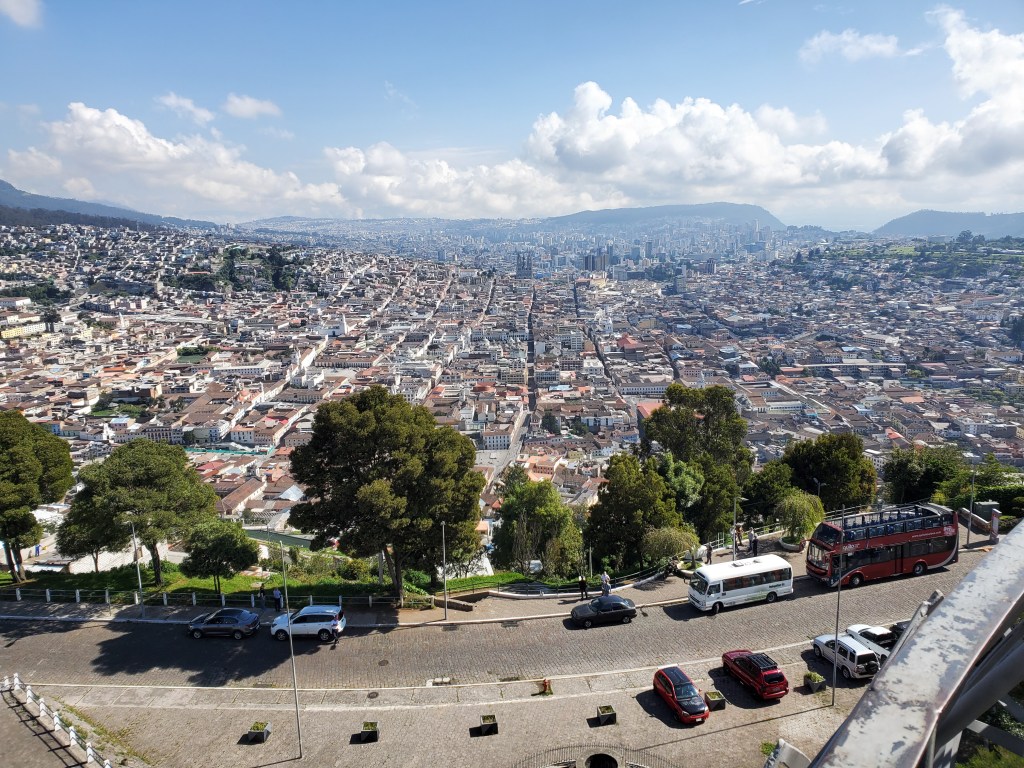
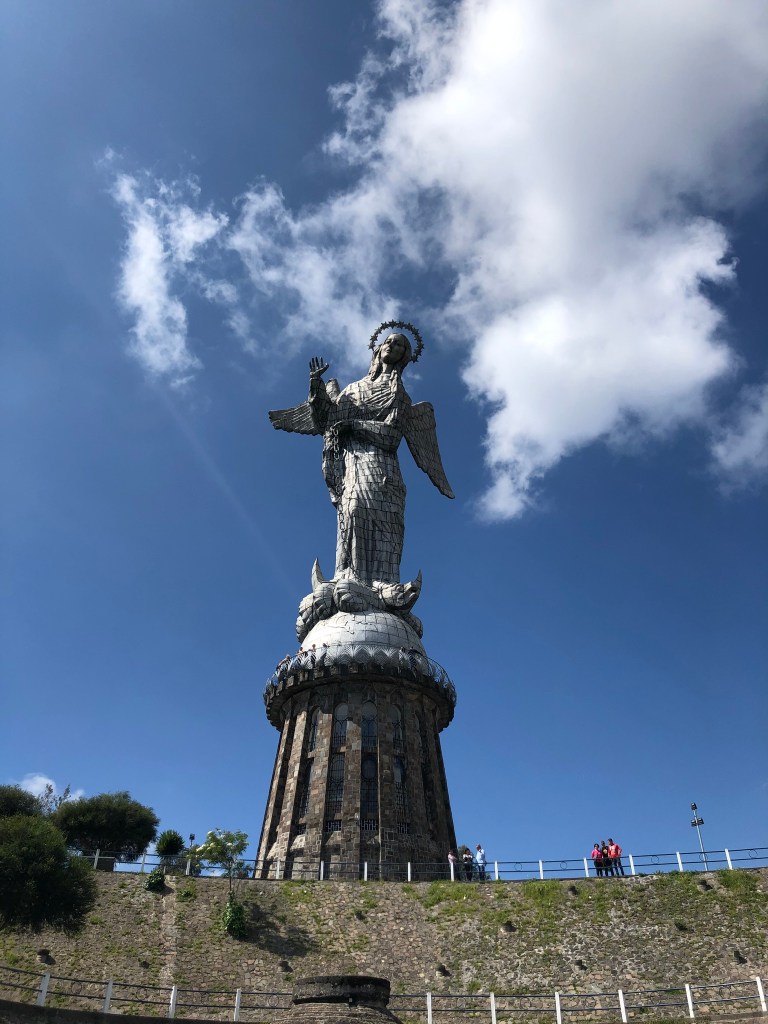
After breakfast, we truck down to old town in south Quito and walk up the Virgin of Quito statue, with a beautiful view of the city and the valley. It’s sunny with some clouds, but no rain today. Despite generous sunscreen, I feel the effects of high-altitude sun and the warmth of slightly seared skin.
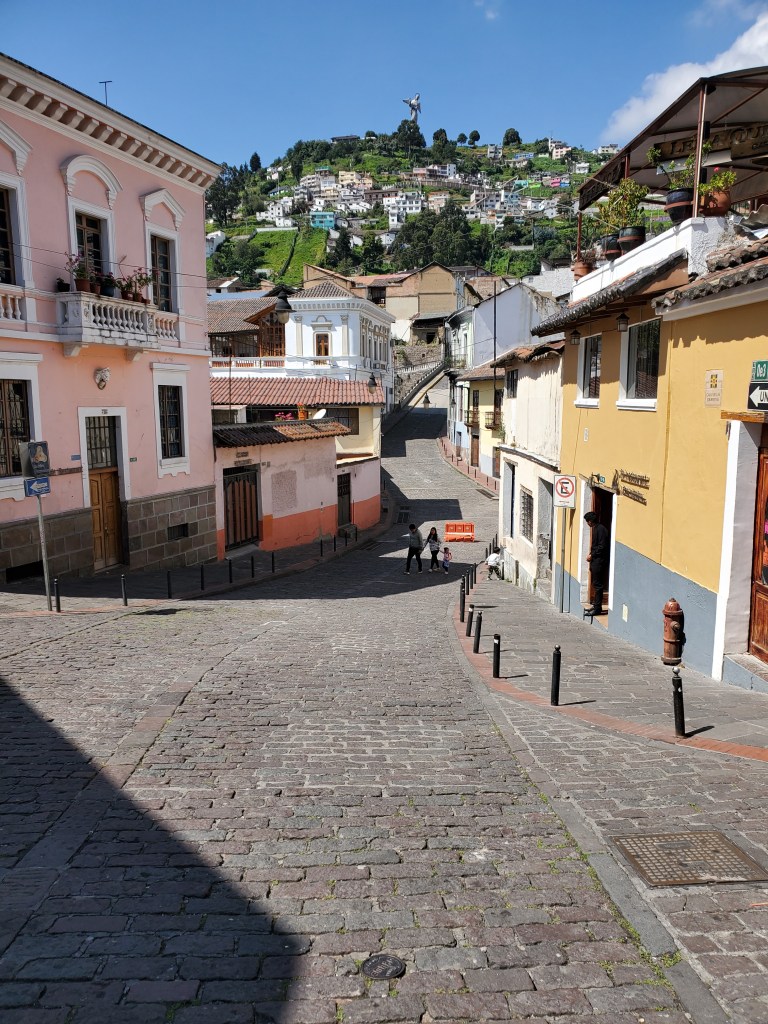
We walk through the touristy downtown of old Quito, which I’m happy to do only once. This part of the city has the trappings of big-city-anywhere that tend to make me sad, check my wallet, and want to leave: the picture-hawkers like the guy in a random Transformer costume pushing photos on a passerby, the weak Batman impersonator across the square from an (actually kind of impressive) Joker impersonator; vendors selling questionable ice cream or churrros dangling from what looks like an old radio antenna. These things are facts of urban life, but not my motivation to travel.
Courtesy Carl C
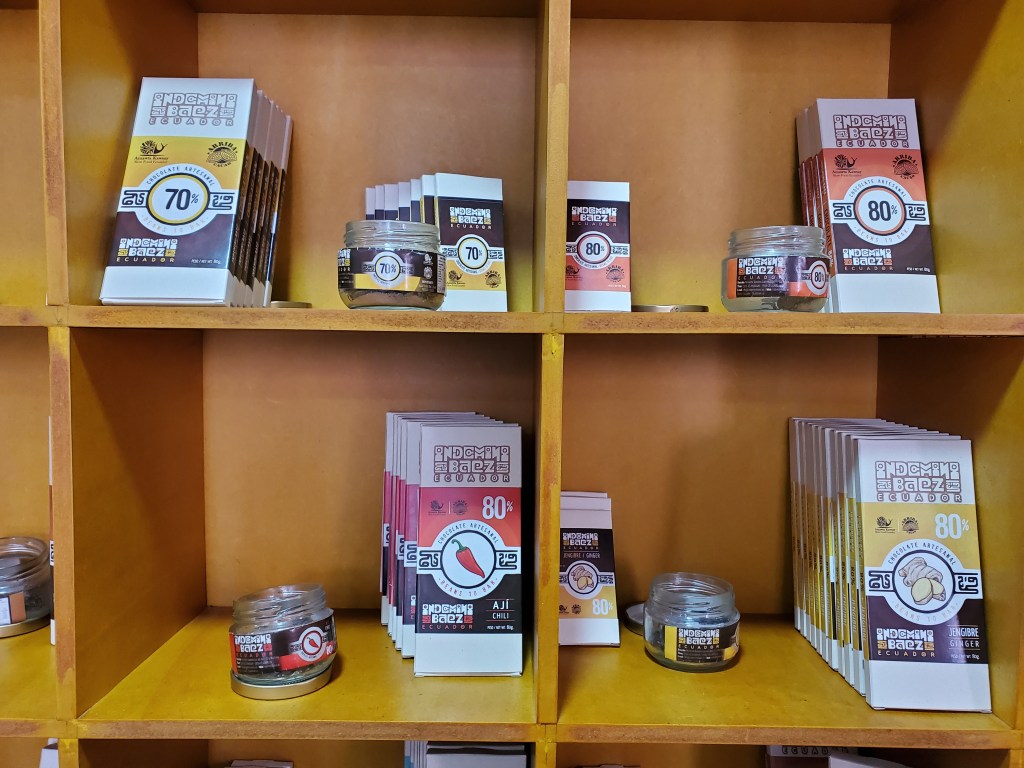
We stop at a chocolate shop and buy a few gifts. I order quinoa soup for lunch and then we tour one of dozens of Catholic churches in town — this one reportedly having the most gold of any church in the world.
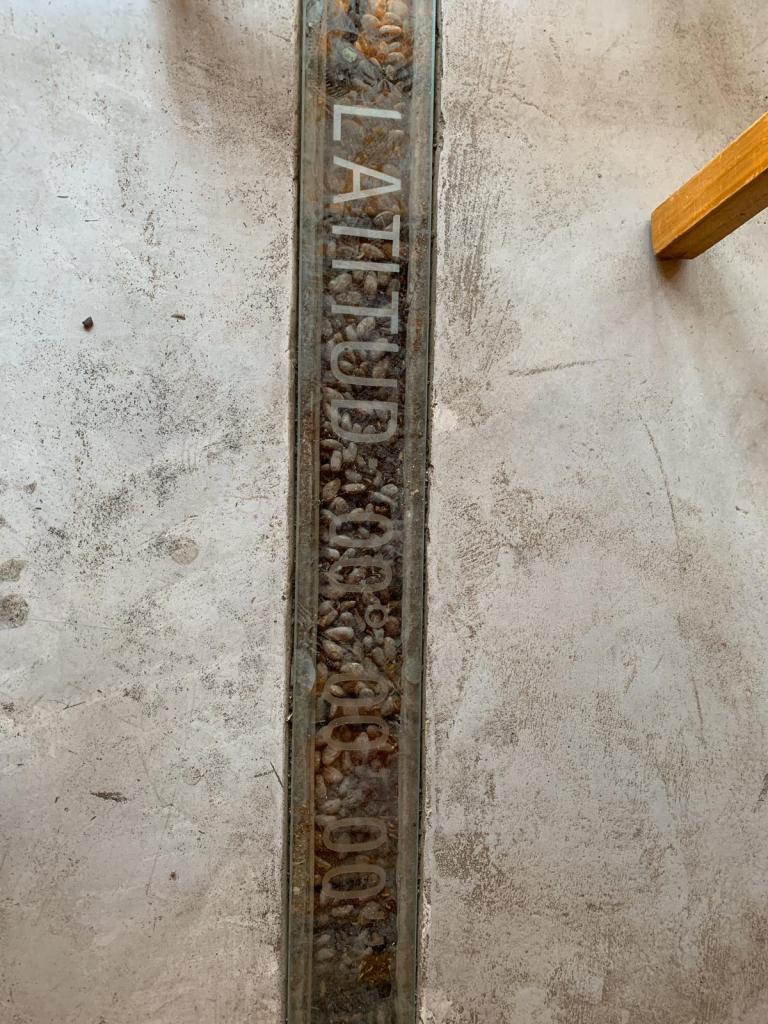
Next we drive forty-five minutes across town—traffic, heat, and pollution stretch it into something longer—to a museum devoted mostly to standing precisely on the equator, with a scattershot collection of oddities stapled on.
The few equatorial displays are entertaining: See how the rotation of water drainage changes as you move from one side of the equator to another (in an act that an informed local later tells me is thanks to sleight-of-hand rather than physics). See if you can balance an egg on the head of a nail, while precisely on the equator. Walk, jump across, or have your picture taken on the line. Fair enough. But the rest is deeply peculiar. Painted here on this wall, behold some cartoonish Ecuadorean animals! Look out above, as suspended by wires from the ceiling is in-no-way lifelike stuffed anaconda (apparently endowed with the power of both constriction and levitation). Most cringeworthy of all, on display in a replica mud-thatched hut is a real Indigenous woman. She wears vernacular clothing, but the guide’s script requires him to point out that she would have been naked in the jungle, which thought no one finds Edenic. The guide’s script then directs the audience to the woman’s tribal wares on sale and suggests that buying something might help this destitute woman, increasingly impoverished by encroaching civilization, as he waves a hand towards the crowd. On cue, the woman pleads in pre-Quechen tongue to buy something from her, which causes the looming awkward silence to grow and take up even more space in the small hut, as the cornered patrons eye the low-silled exit beside her basket of wooden blowguns.
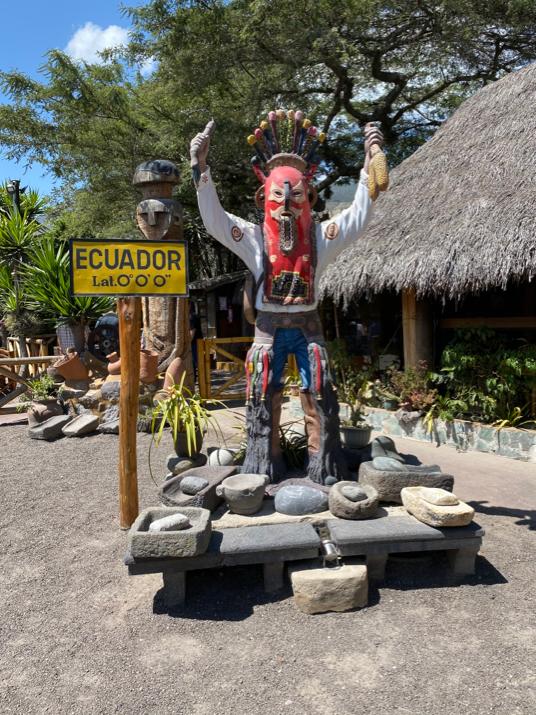
At the next stop, the guide’s script asks if anyone knows which US state tiki statues come from. A fellow American, I think his name is Clem, shouts “Alaska!”. The guide politely ignores him, but Clem offers it again with even more enthusiasm. The guide sighs and mumbles as he turns to the next stop, “It’s Hawaii”. As his employment requires, the guide again quizzes the audience on the actual shape of the earth, if not a perfect ball. Clem’s excited reply of “Concave!” was not one of the numerous answers the judges would have accepted, such as anything suggestive of a flattened ball, pear-shape, etc. At the next stop, science makes it literally impossible for Clem to walk five steps along the line of the equator without stumbling wildly, nearly losing from his backpack his new blowgun. At the last station on our tour, the guide shows us a pen of guinea pigs, and asks if we have had the chance to sample the most well-known local dish — yes, guinea pig. I leave the museum convinced that some weird shit happens on the equator.
 Travels With Burma Jones